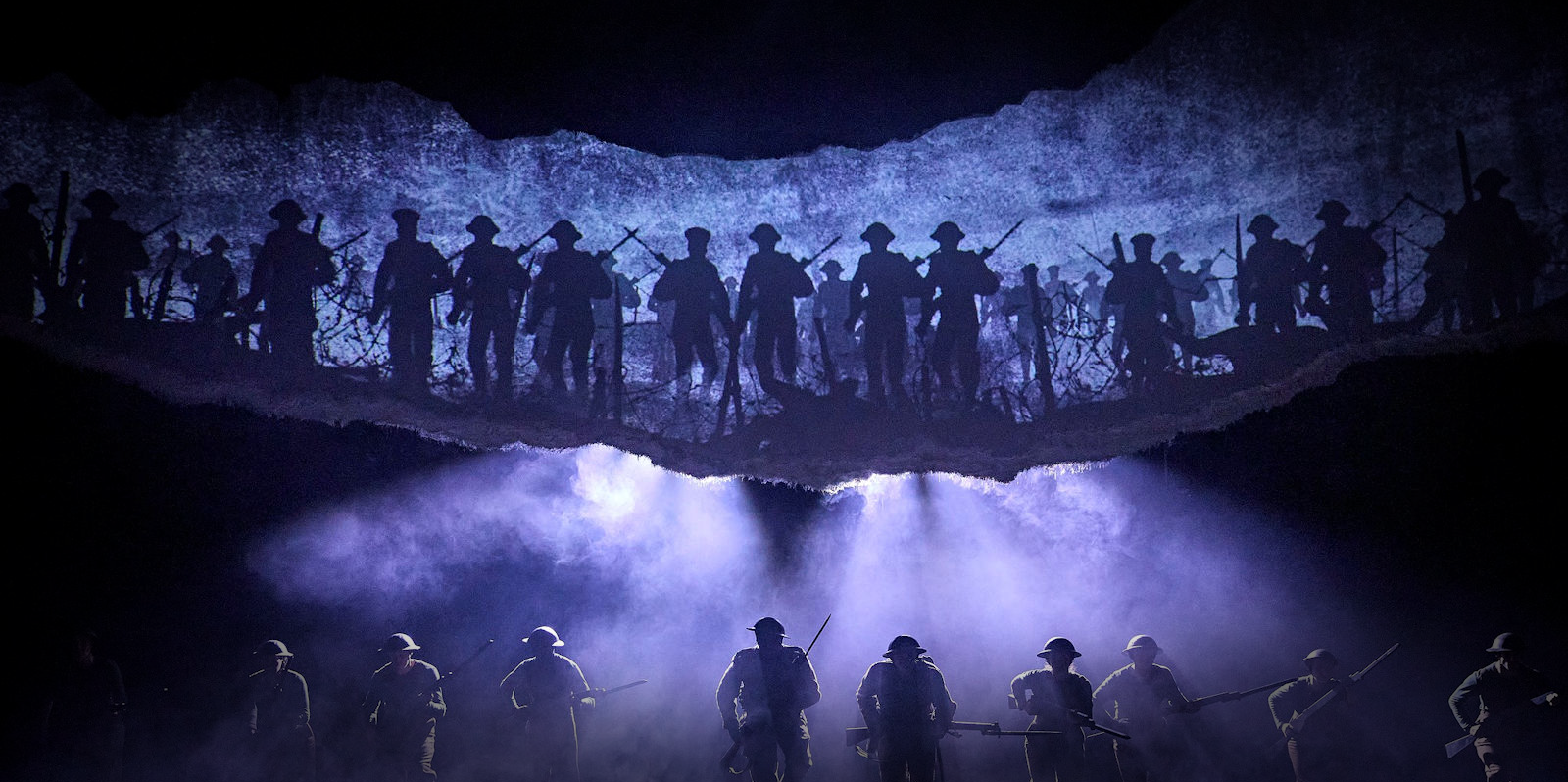
• Warhorse – The Rip

    Late august my good friend Jack Nicklin-Jewell got in touch, he was in rehearsals  programming the upcoming tour of warhorse and had some issues with the 3D model of the projection screen didn’t match the physically built screen.  d3 was being used as the media server of choice for the tour and it was important that the mesh used in d3 was matching as close as possible to the physical set
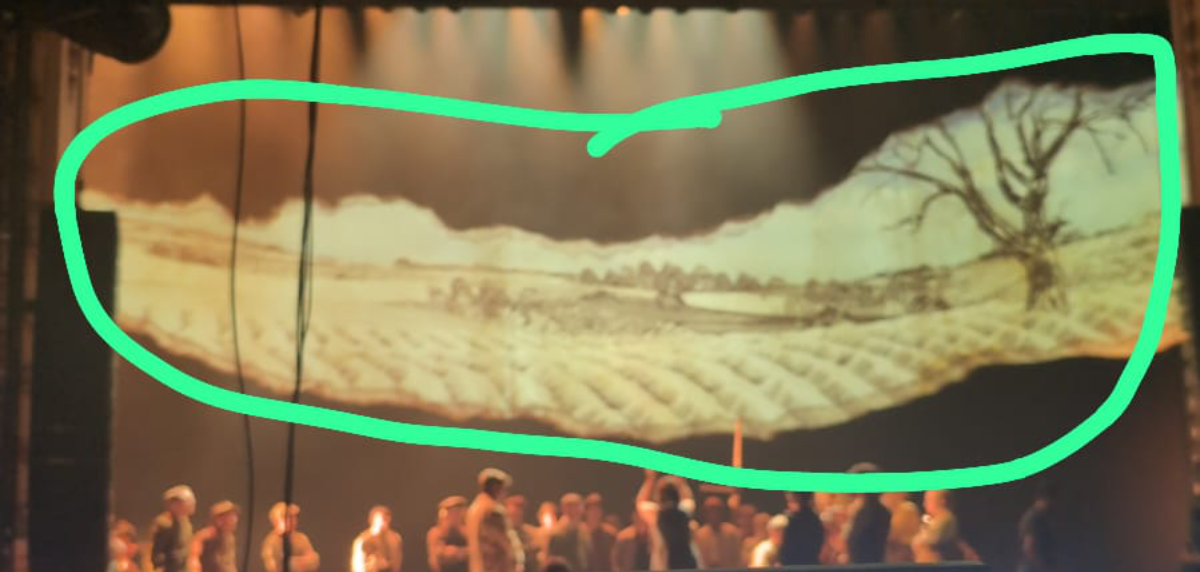
    Jack had been supplied with a cad of the drawings that the set had been constructed of but additional set dressing had been added to the original plywood base to make it look like a giant piece of paper torn from a page, thus why it is called The Rip. The install of the show in various locations around the UK was going to be very tight and handled by LX,  to help with a faster slick lineup Fibre optic LED were placed embedded into the surface of the screen. This meant that for lineup it was a simple task of dragging the “quickcal” points from the 3d mesh  onto the physical set and the software would workout the rest.
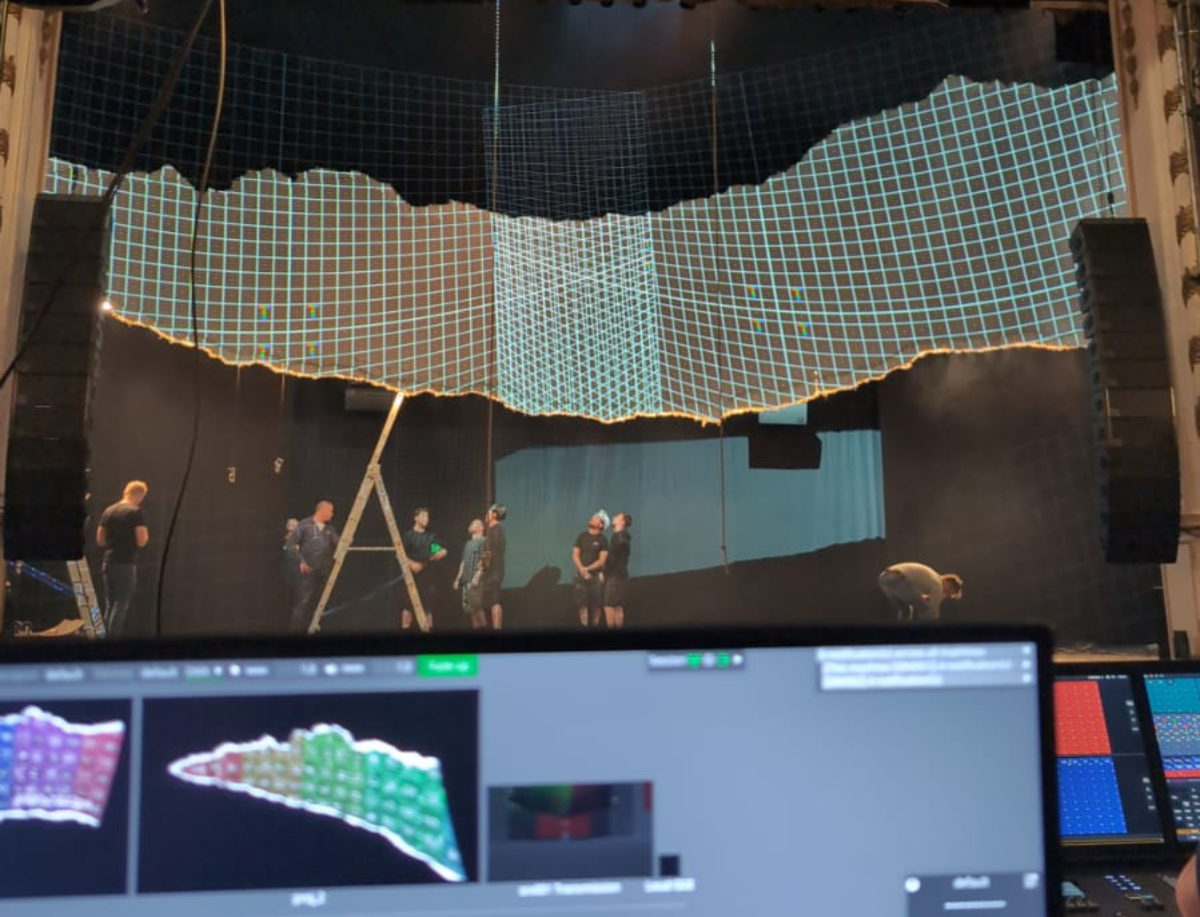
    When I first got the call, the production had requested a scan with my Faro Focus but on further discussion and finding out what the actual job was I decided that reconstructing the set using photogrammetry. The main reason being was to make sure the fibre optic lineup dots were captured, this is a detail that could be missed by the the scanner and also I have more control of the actual image texture captured in terms of light levels and quality of image VS the image capture on the scanner.

    I was already traveling down to london to do my yearly CVC banking conference with Graymatter and Giggle Studio so I also packed my Sony A7V to go and do the image capture of “The Rip” at Wimbledon before my main job. Over the last few years I’ve been using photogrammetry quite a bit for constructing models but only in the last 12 months has it became part of my official workflow supplementing or replacing a traditional scan depending on the project and the environmental factors.

    I arrived in London early and checked into my hotel, I wasn’t on the Graymatter job until the following day so this fitted in nicely. I packed my camera kit and headed over to the New Wimbledon Theatre where they were rehearsing warhorse. I met Jack & Alex there and we went in to find an opportune time to capture the images, I needed a clear stage but as soon as the actors had finished onstage everyone else wanted access to the stage to do other stuff, classic theatre. We eventually found a time where i had 20 mins to get the images, I had already prepared ahead of time some 4k static noise to project onto the surface, this was done to generate some features on the surface of the plain set piece to help the software reconstruct a mesh. Without any features, or very few its very difficult for the photogrammetry software to generate a model form the images, projecting a basic static pattern on a plain surface to help the software was a little trick I developed when doing some R&D into this problem earlier in the year and it works a treat.
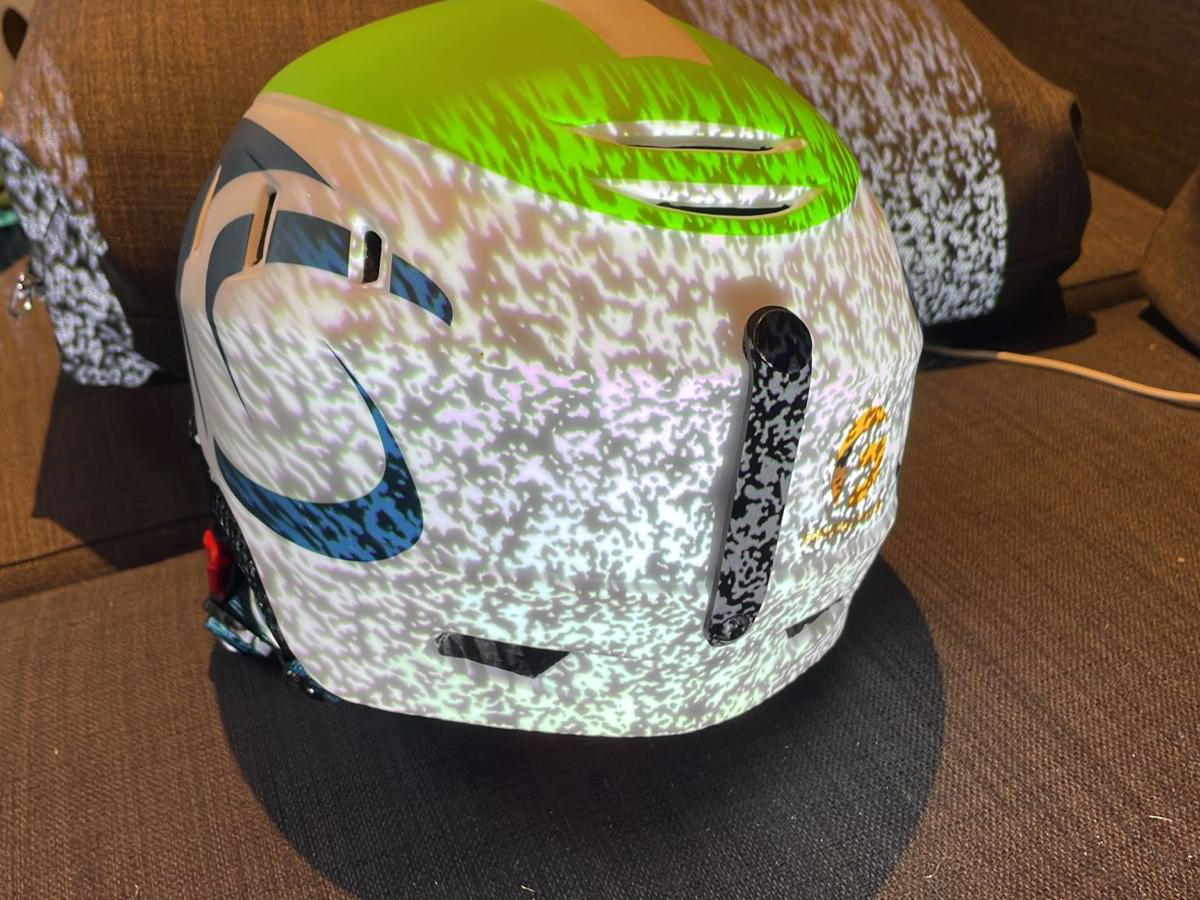
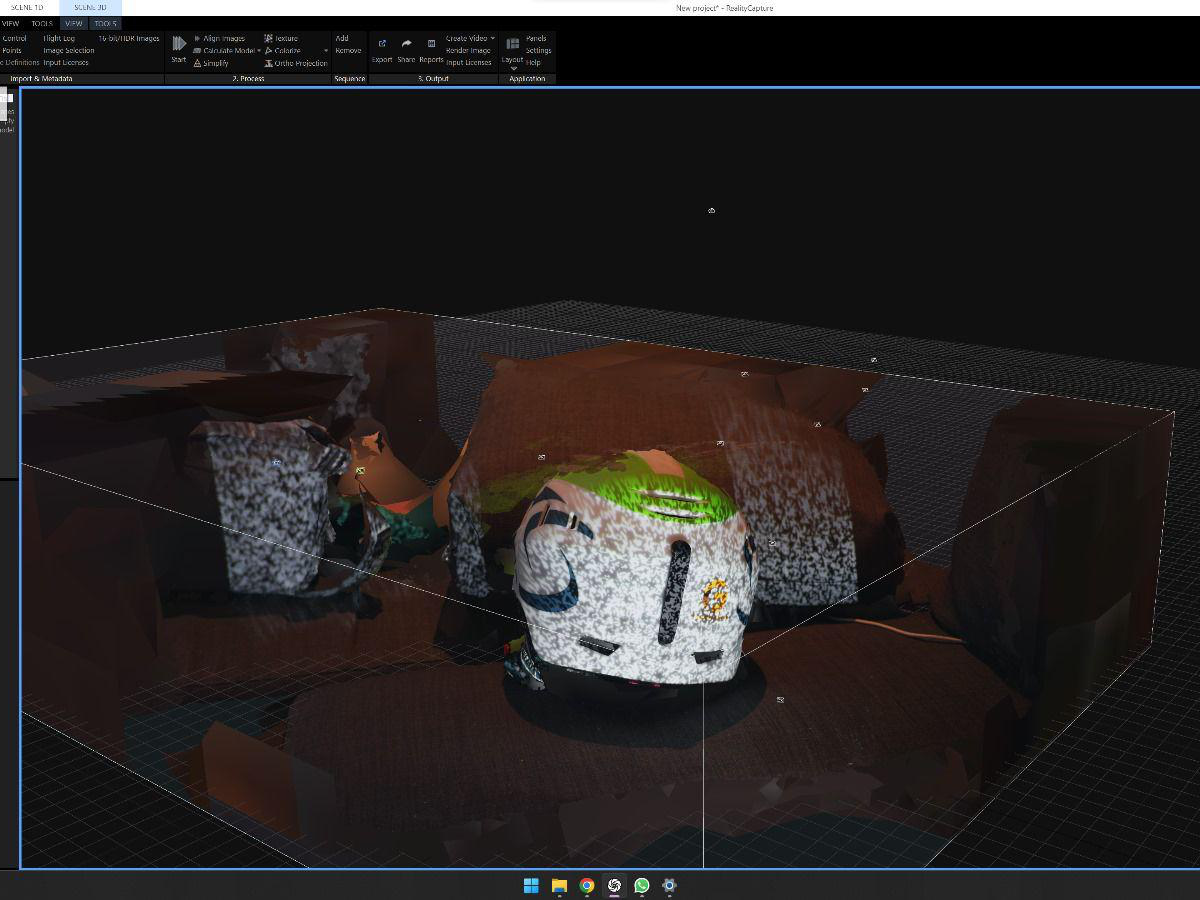
    Above are a few of the R&D images using projected noise to create a reference base.

    Eventually after rehearsals were done i had time onstage to capture the images, it was quite a dark stage even with the lighting and projected noise hitting the projected surface so had to use a higher iso and shutter sped thank id have liked to but i was on a tripod so the shutter speed wasn’t too much of a problem. I took several test shots, checked them on the camera, adjusting my camera values until I was happy with the settings. I think I took around 80 images in a linear parade at various distances and angles to the surface. In addition to the set piece I also made sure I captured the proscenium arch which i had physically measured the distance and then I used this distance to scale the whole scene when reconstructed so the virtual matched the physical.
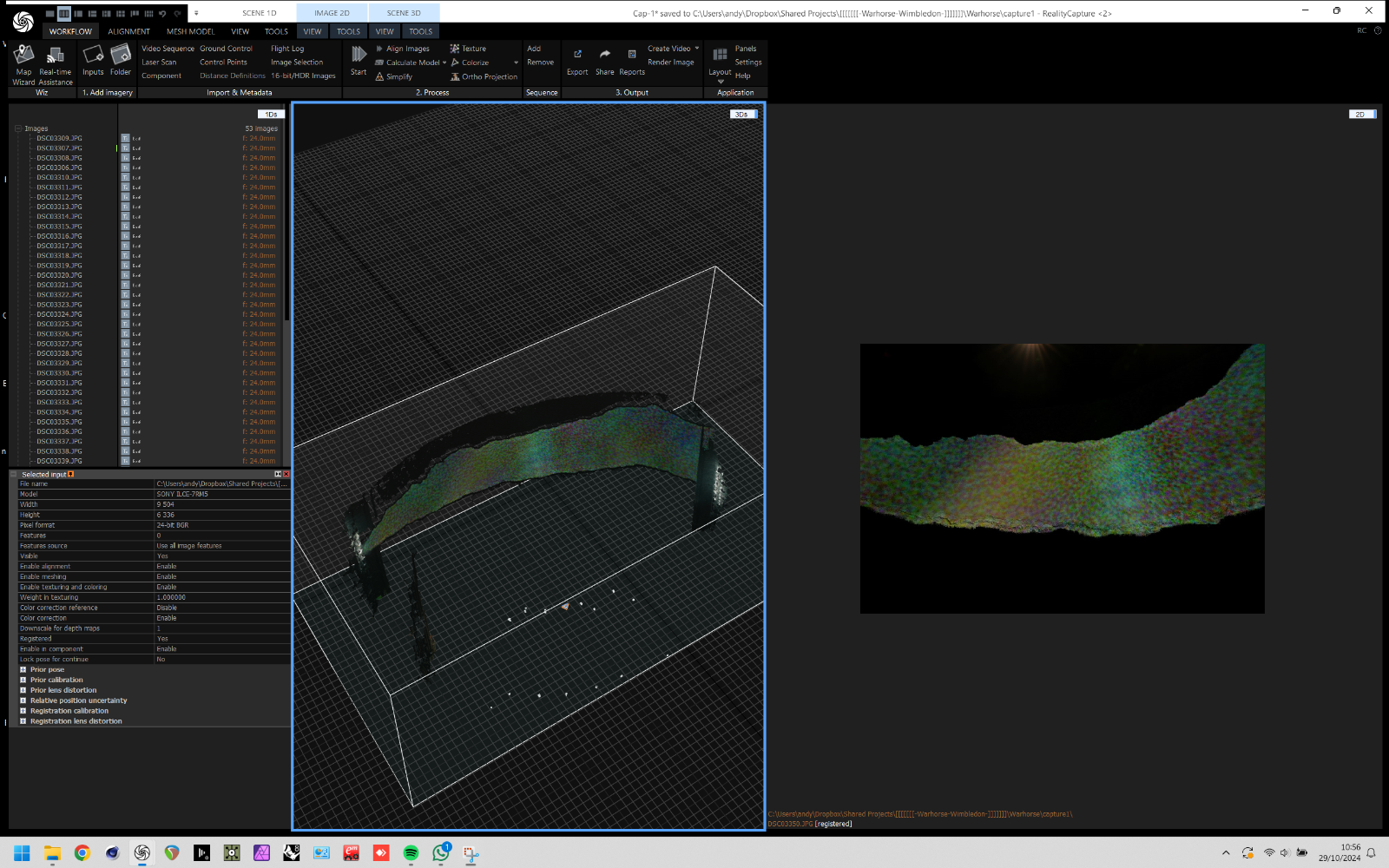
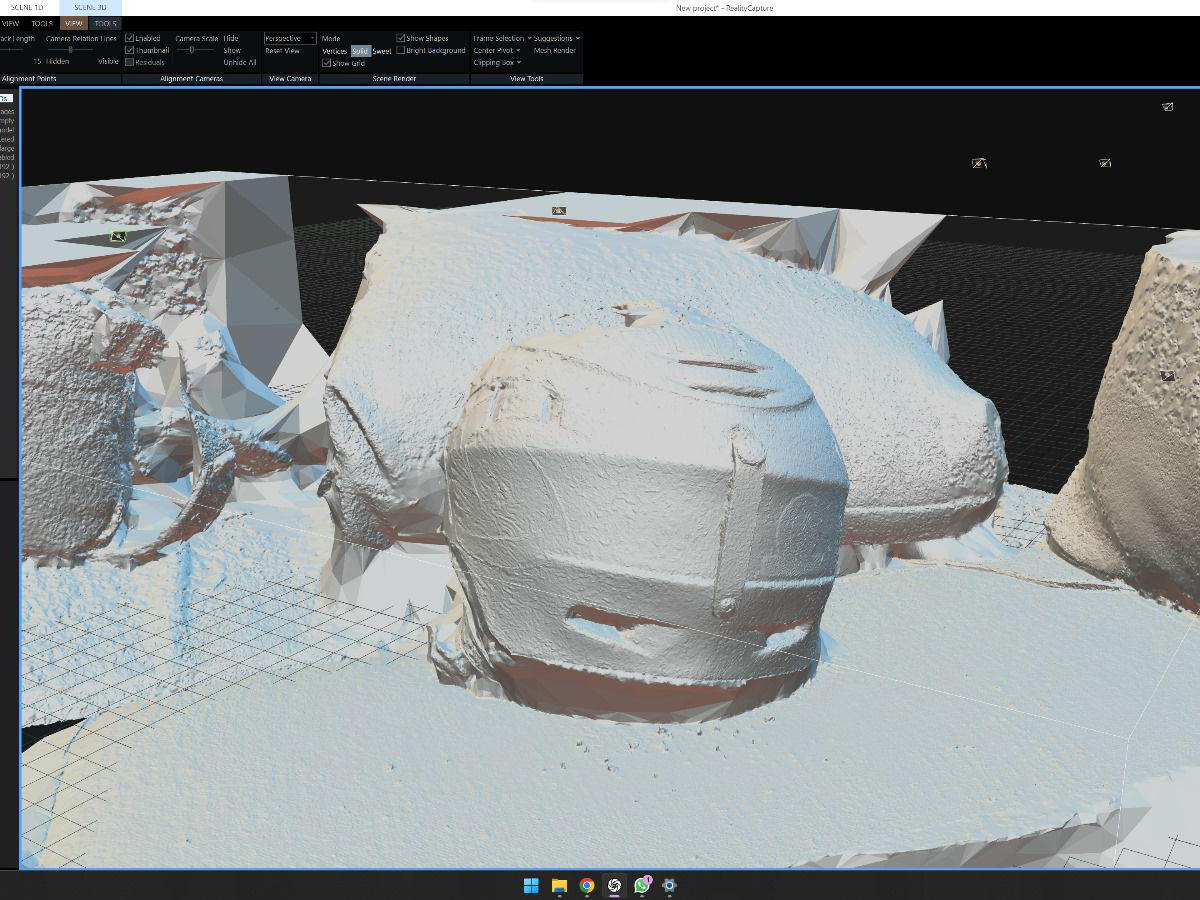
    I brought all of the images into Reality Capture after a little bit of tweaking in DXO photolab and RC did an excellent job of aligning the cameras straight away. I did a reconstruction box to get rid of the rest of the theater that didn’t need constructing but kept in the proscenium left and right which i was using to uniform scale the scene. The trick with projecting noise on the surface worked a treat and it gave me a nice clean construction of the surface.
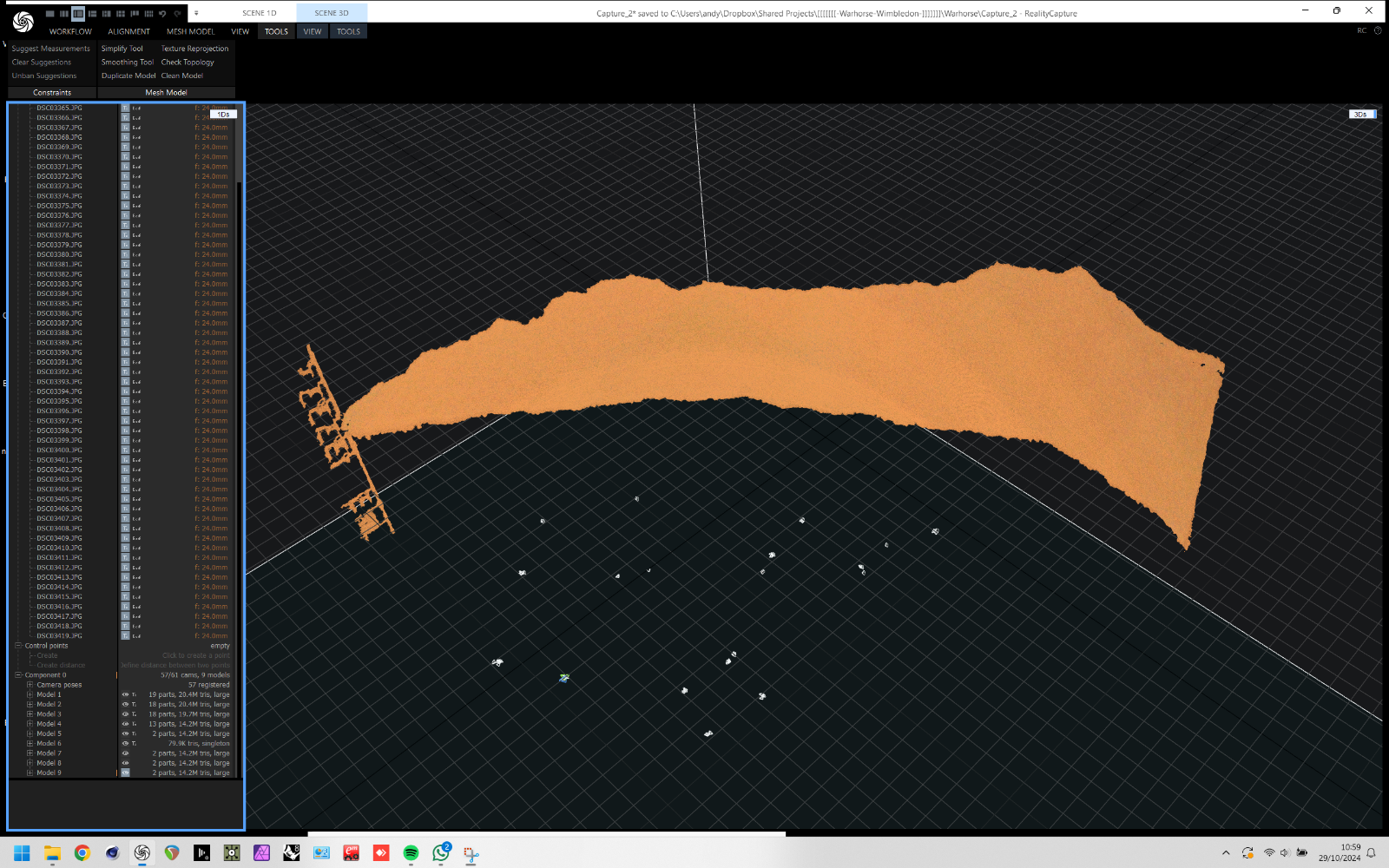
    Once I scaled the scene, I filtered out all of the polys that weren’t part of the set piece, generated a 8k texture and then exported it as an FBX ready to go into Cinema4d to do the retopology and UV.
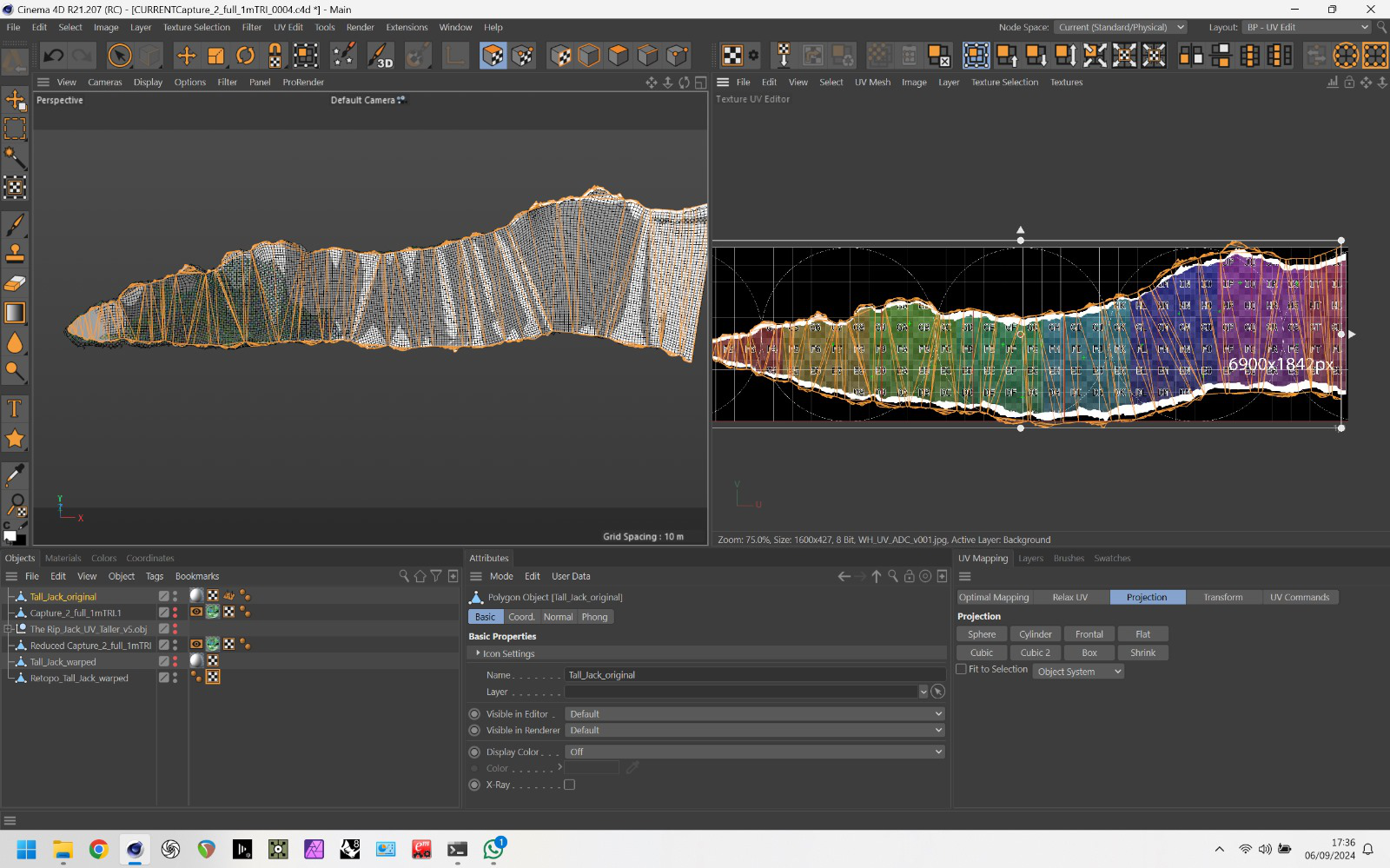
    There was an existing model built from the cad that didn’t match the set butt here was also the associated UV with the model that I needed to closely match with the new retopo I was doing from the capture data. For testing purposes to send to to jack to make sure the workflow fully worked I did a bit more clean up of the mesh in C4d and did a quick mesh using Quadremesher a great tool for a quick quad based mesh. I then did some further clean-up on the re-mesh, matched the UV and sent it over to Jack for testing.
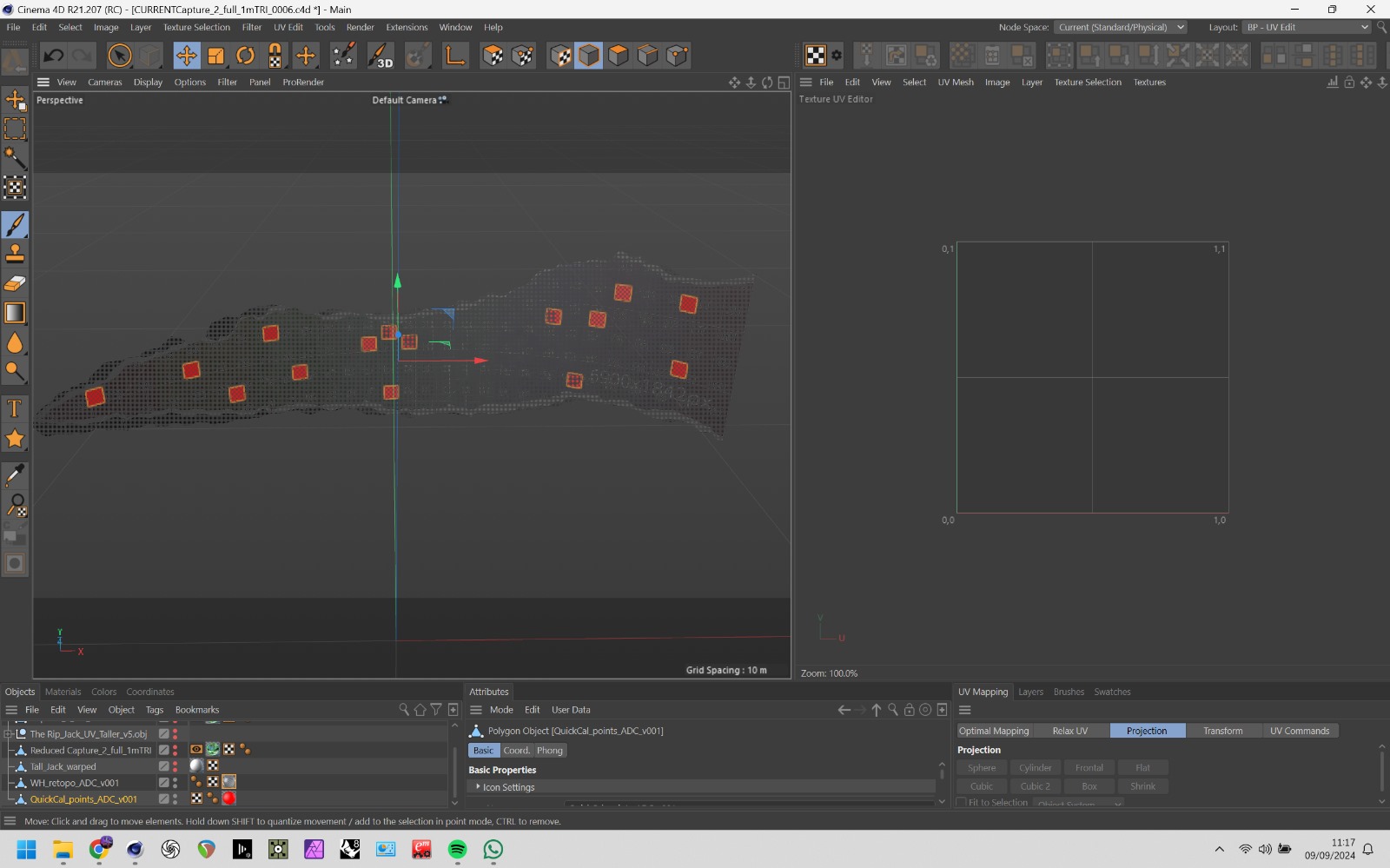
    I then went back to the model and started doing a much cleaner retopo, quadremesher is good but in many cases doesn’t give a clean edge on an object of this shape. For my manual retopo I started with a cylinder shape and scaled it up so the radius of the cylinder sat exactly un the “cup” of the screen mesh. I then messed around with the horizontal and vertical sub-divisions to get a good density of quads, once I was happy I made the object editable, roughly deleted all the quads I didn’t need around the edges. Once I had the overall shape, I used the photogrammetry mesh as a guide and using the knife tool I cut around my really clean quad mesh until it was exactly the same shape as the capture mesh. Its totally worth doing these things manually so you have full control of the process, also having a clean mesh like this made the UVing so much easier and cleaner to closely match the existing UV
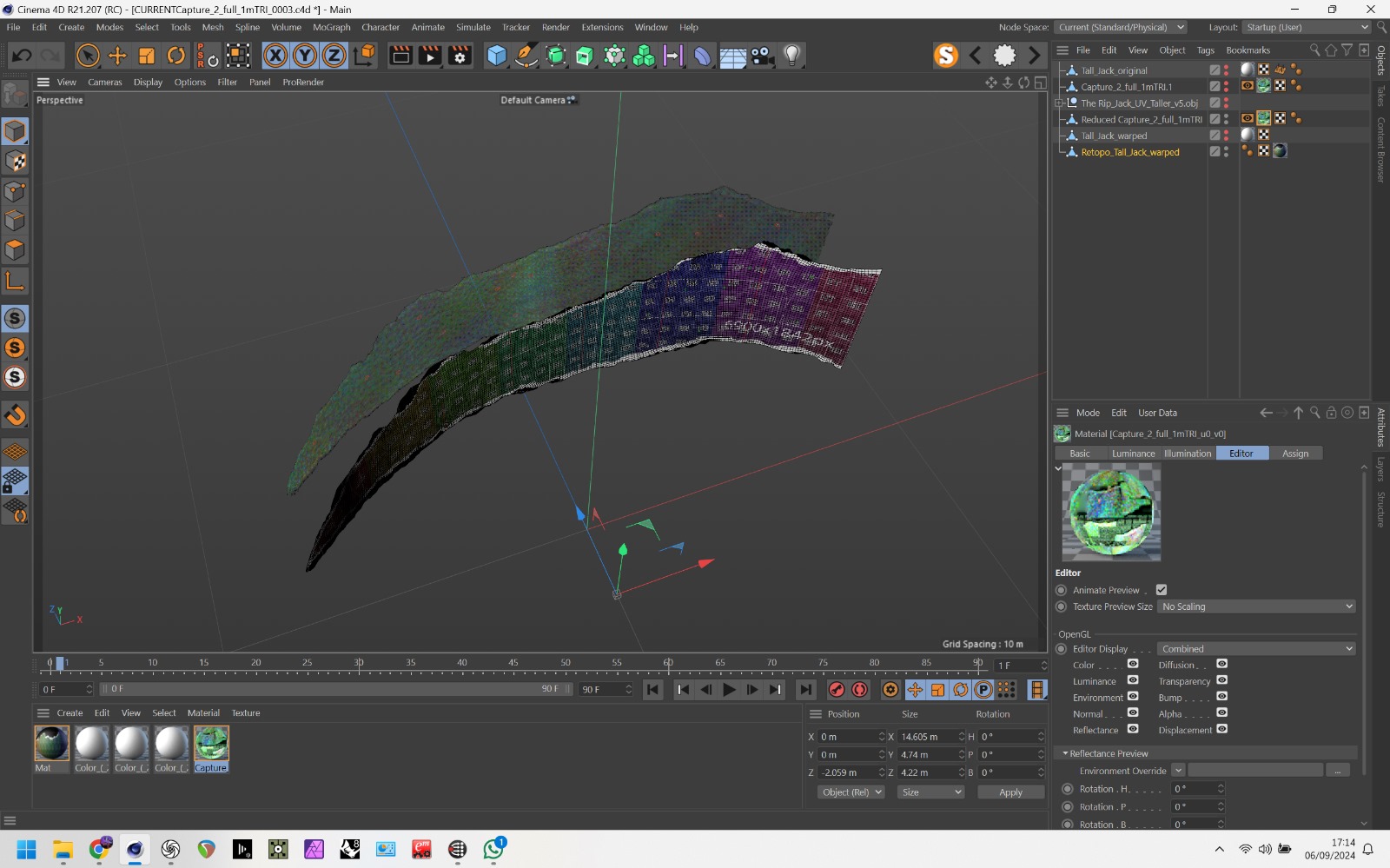
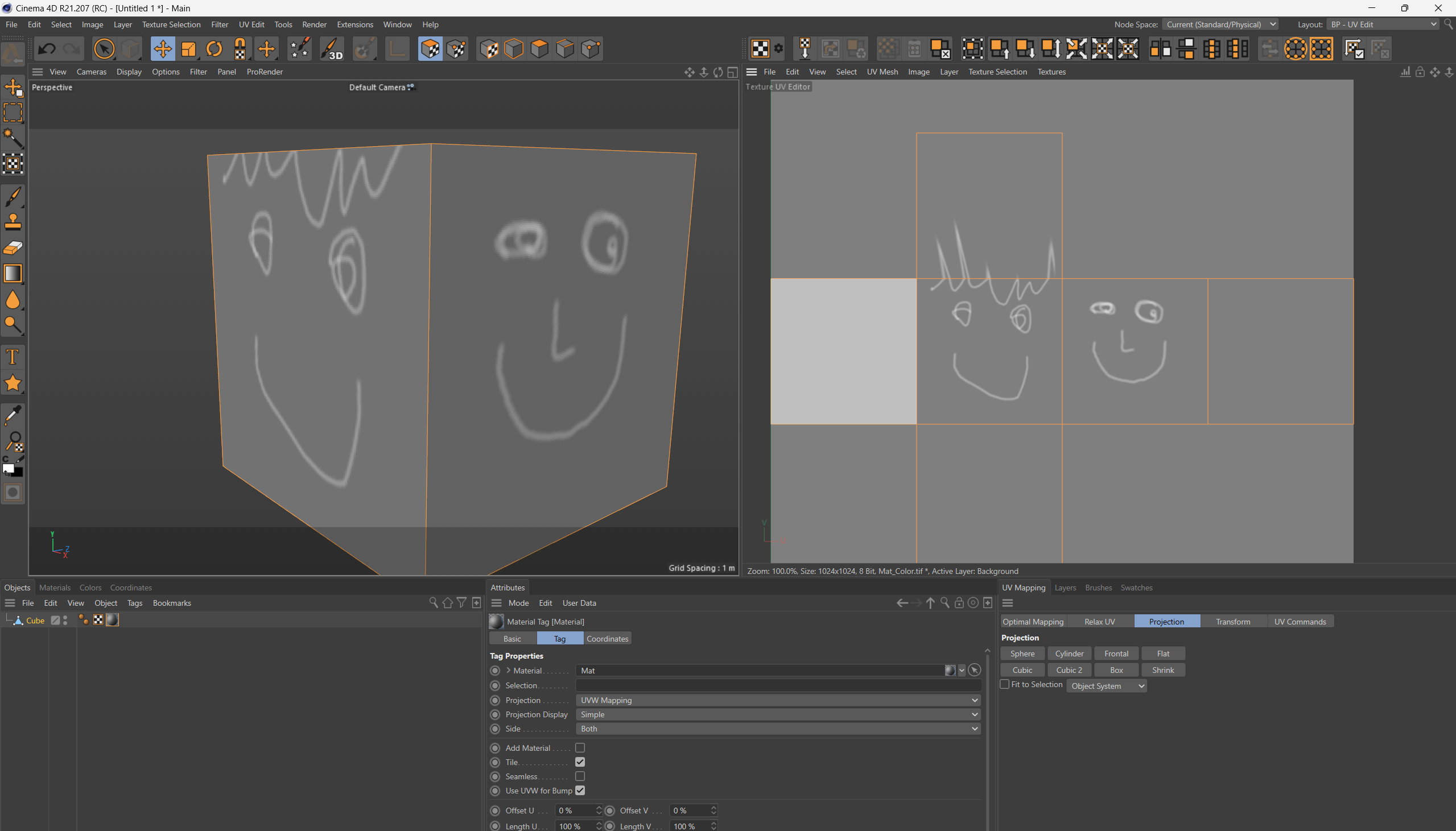
    The next step was to locate the fibre optics from the photogrammetry texture and transfer them to a UV layer so this could be overlayed on the mesh for line-up quck-cal the projection during line up. For this is basically overlayed the source mesh with texture on top of the new mesh and then using the 3d painting mode in the UV window in c4d I painted directly in the new mesh and this dot transferred to a UV layer. Below is a basic example, using where I painted a face on the cube in 3d space and it transfers tot he UV, its super useful for things like this.
    In addition, I made another mesh which matched the fibre optic markers as a helper mesh which could be loaded into d3 in addition to the clean mesh as that’s how Jack had it setup and I like consistency

    That’s it for this blog post, this was fun project spanning multiple skillsets and also working with good people.

    FIN
    No comments on Warhorse – The Rip
  • EWC with Bright Studios

    June through to July this year (2024) I was out in Riyadh, Saudi with Bright doing the E-sports world cup, previously known as Gamers8. This was the third year doing this with Bright and the gig has grown considerably since year one which feels like so long ago now.

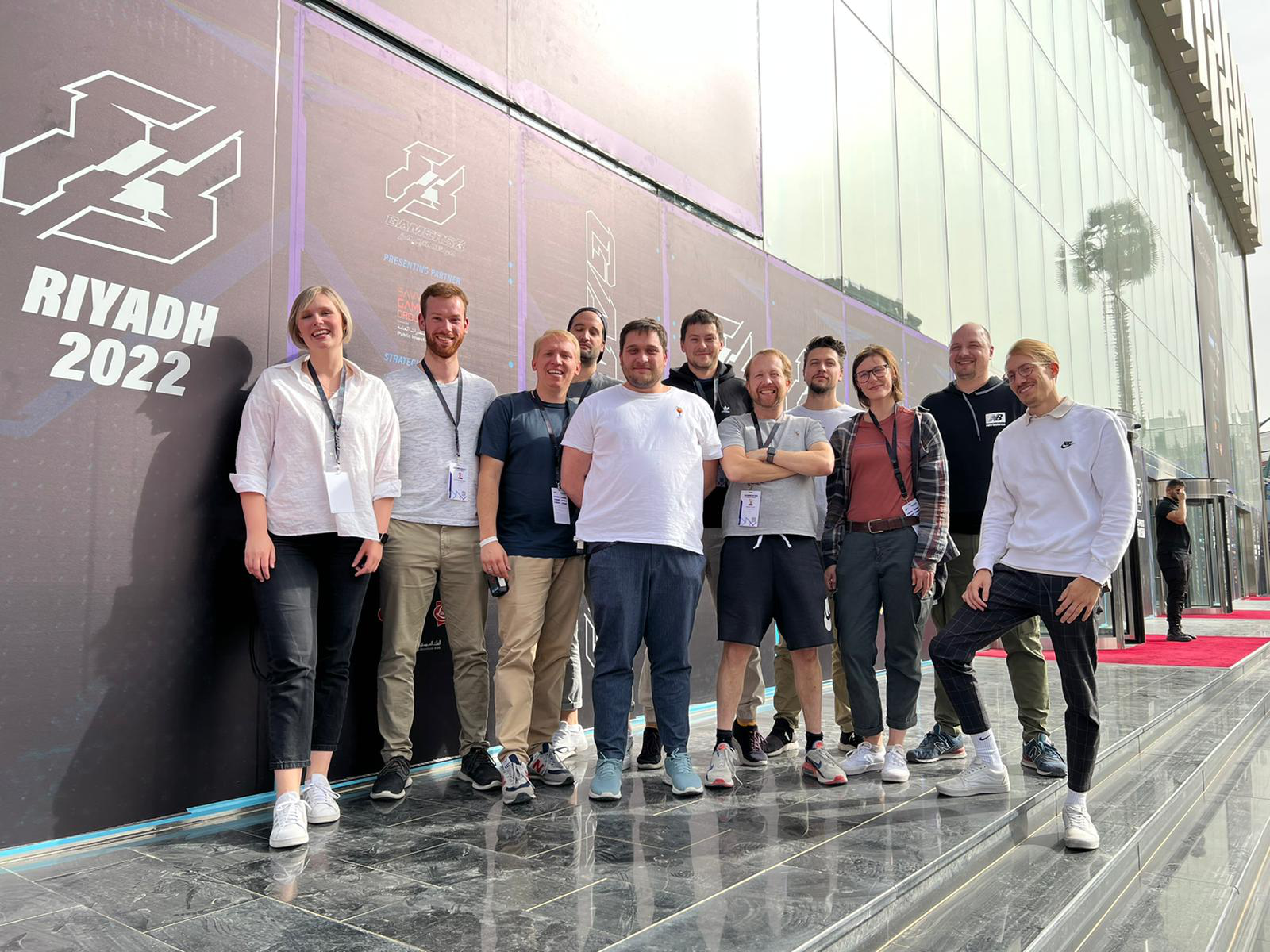
    Some of the year 1 team

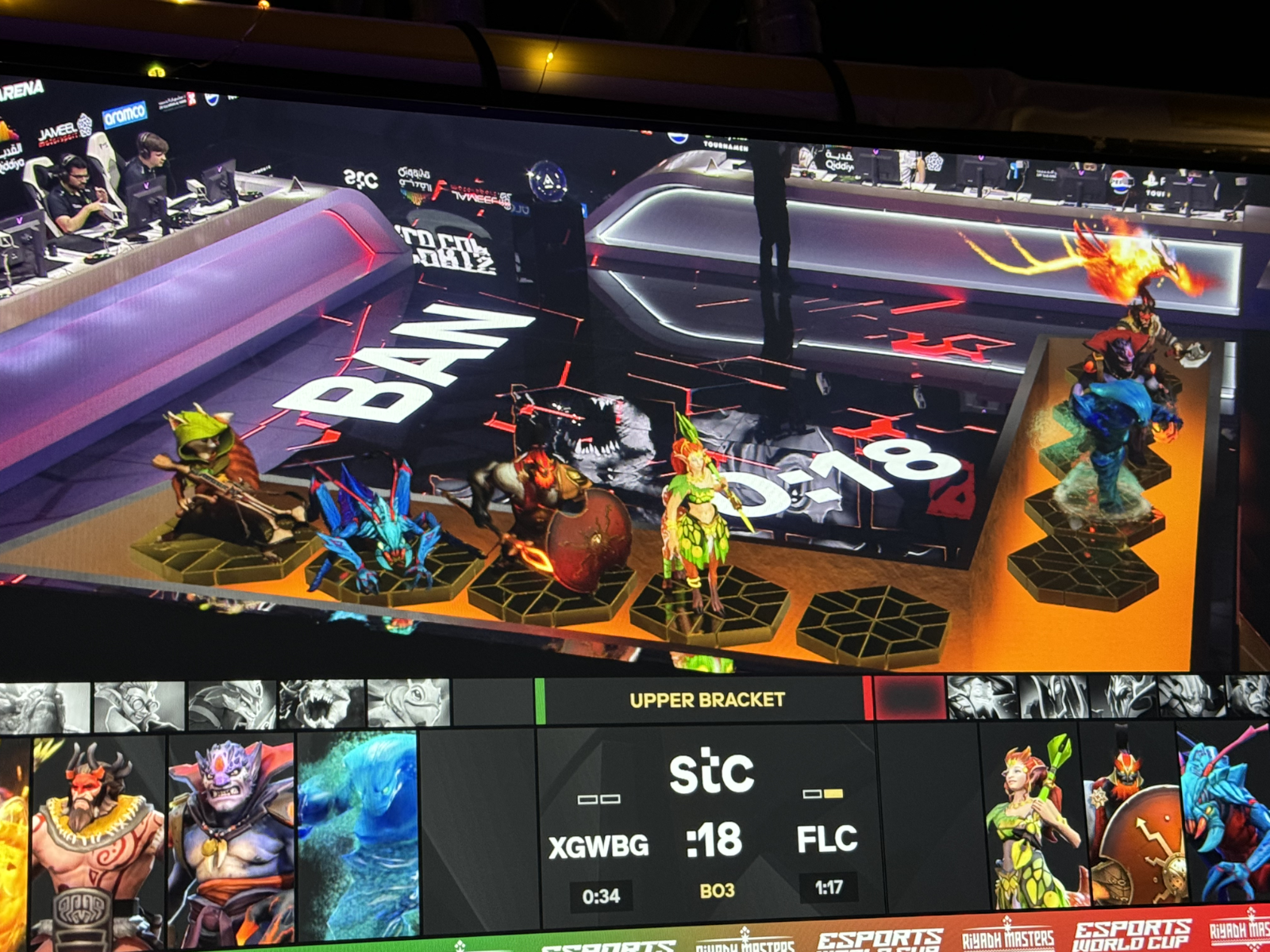
    The event revolves around some of the best esports teams in the world who have been through various stages to get to compete in the world cup in Riyadh. A multitude of games are played over a course of several weeks culminating in a grand final based between 2 teams with the most cumulative points.

    2022 Games arena

    Year one we had one main games arena for the playing of the games and one studio for commentary during and between the games, all if this being streamed to various online platforms mainly twitch and youtube.

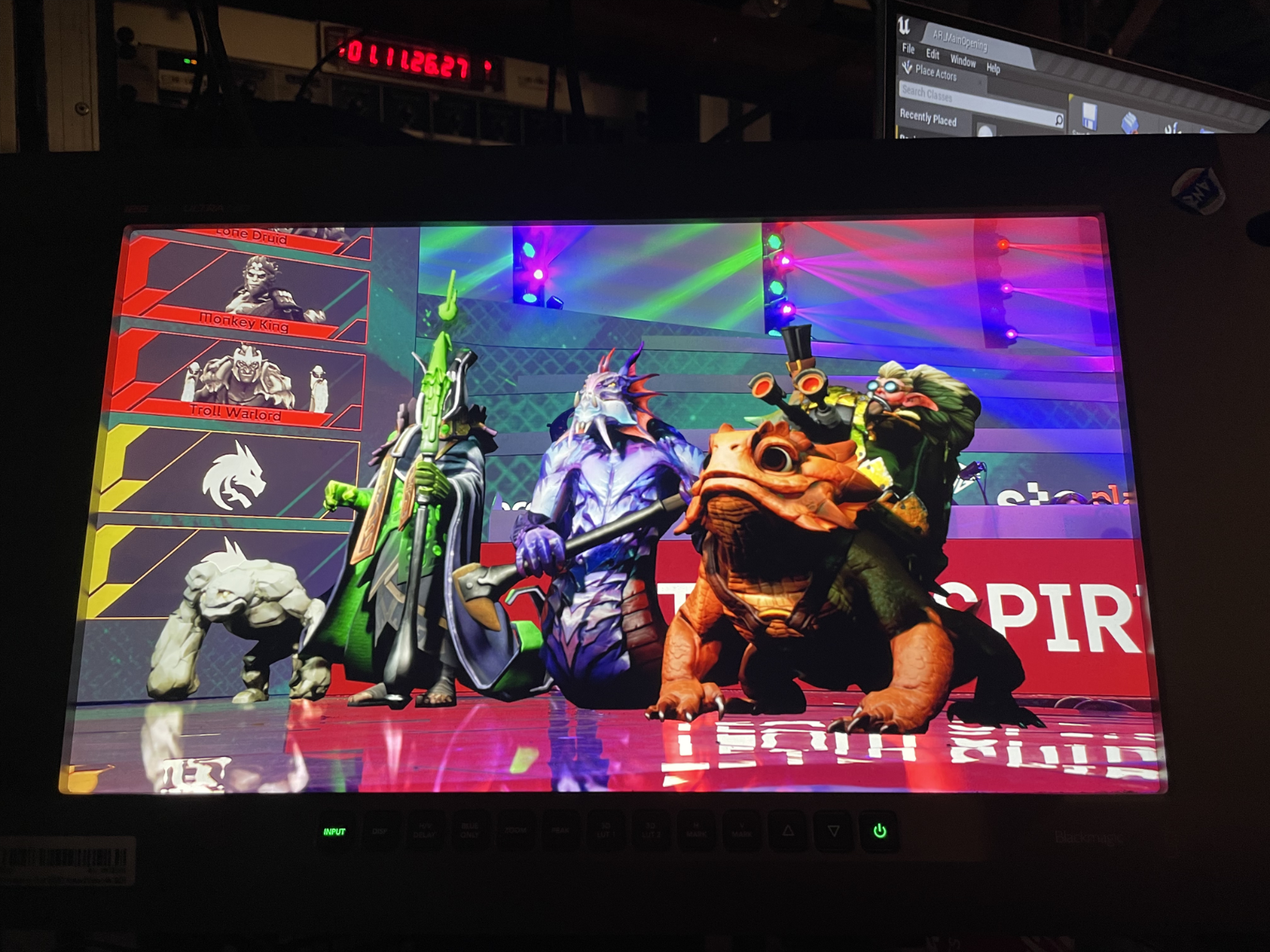
    Both the studio and the arena had multiple AR elements to the show to have game characters appear onstage in camera next to the players and also a very grand opening sequence which started the games each day.

    Tabea & Matt Calibrating Camera Lens’s

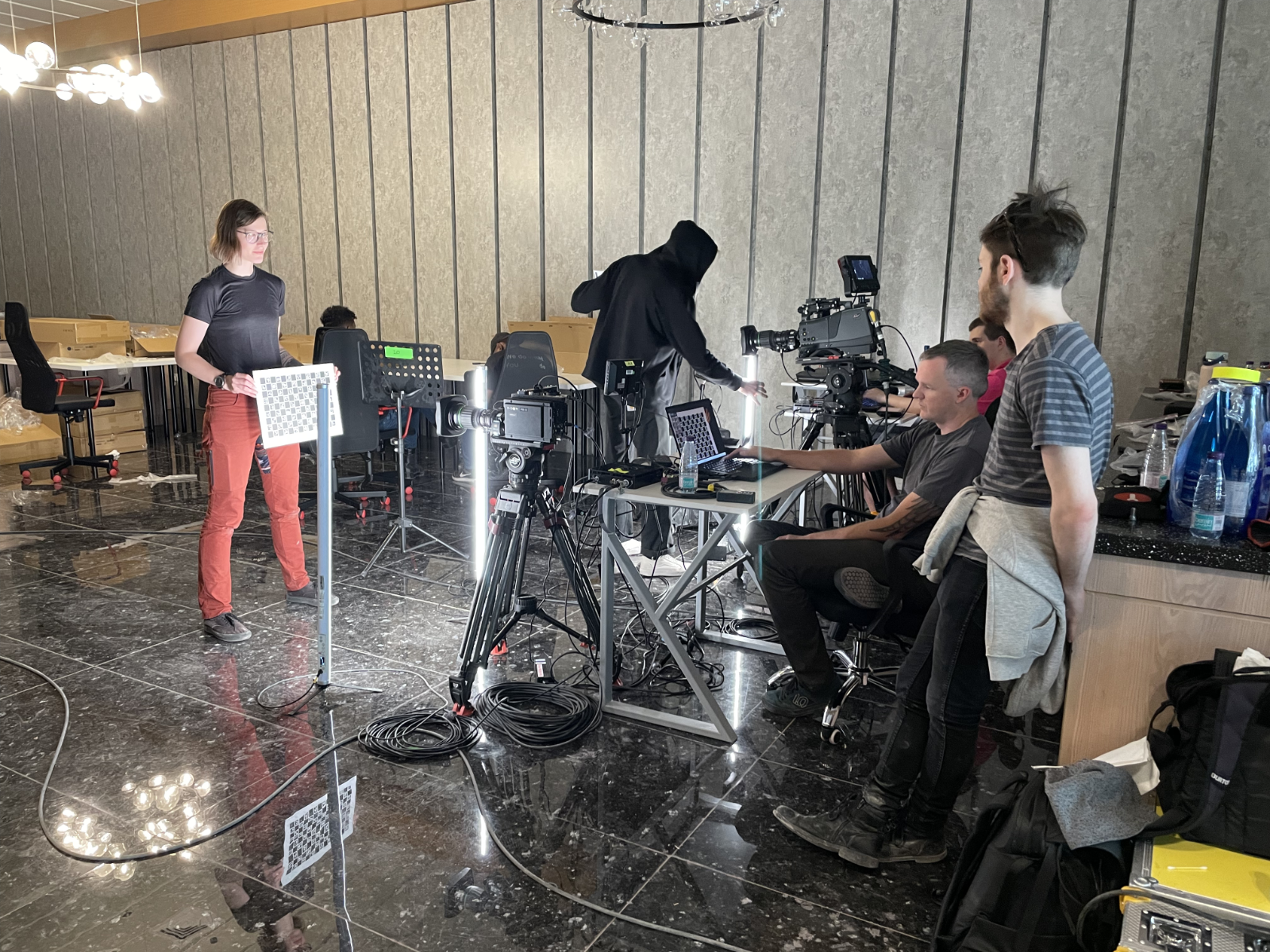
    With two and a bit weeks setup before the the first event there was a lot to do, Stageprecision was used throughout, a team spent about a week calibrating the camera lens for all postion’s creating a lens profile to match the exact camera body it was attached too. This was then used to take into account the lens distortion when overlaying the AR which came directly form Unreal via the Stage precision Shield plugin.

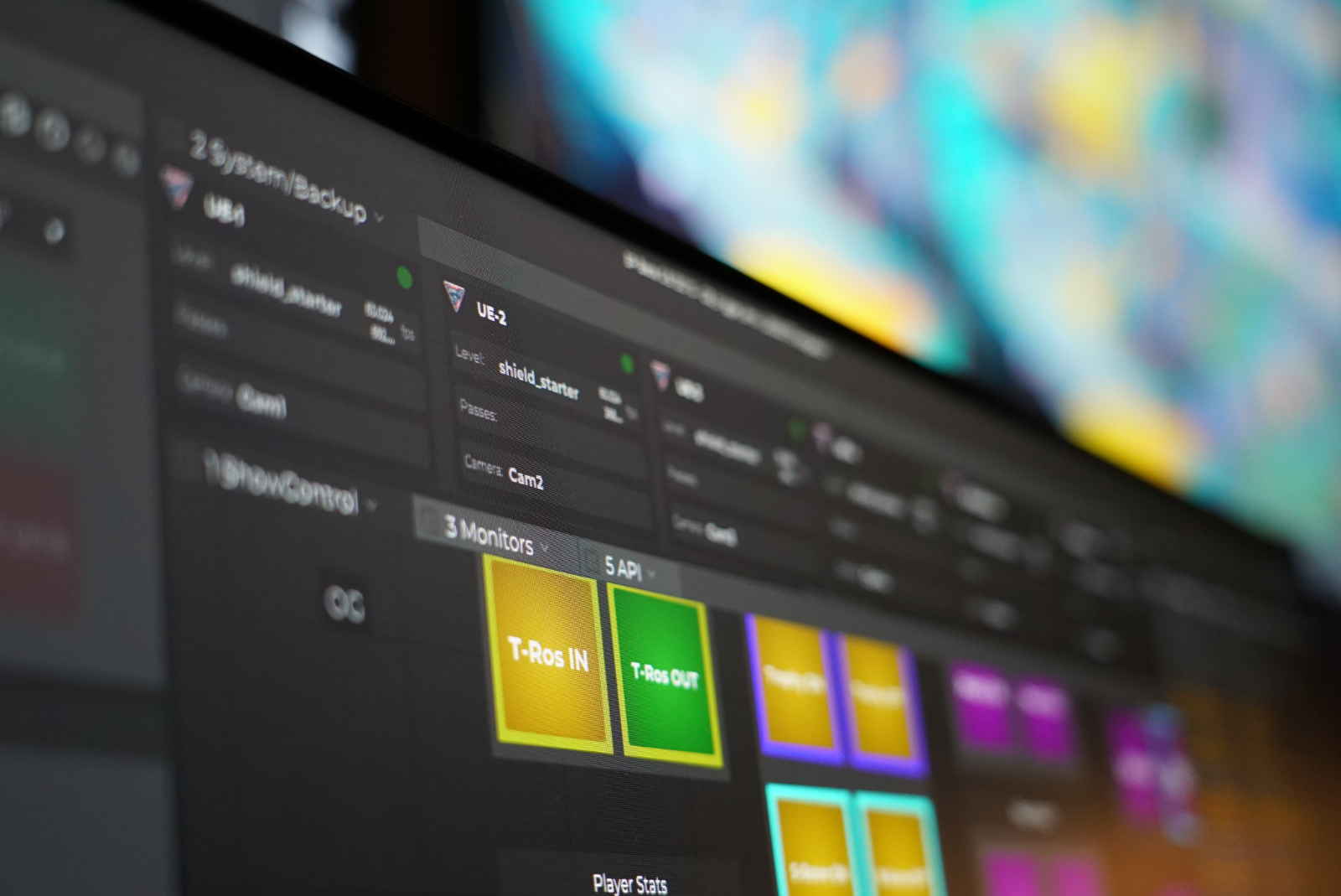
    SP Dashboard

    In addition to controlling all of the Unreal nodes for the AR, stage precision was taking in all of the game logic API and based on events in the game it was then sending triggers audio lighting and disguise. This meant when there was a “spawn” or a “kill” event in the game LX Video and Audio would be triggered at the right time for the correct look or sound stem.

    Krystoph and Tabea measuring for the camera nodal point

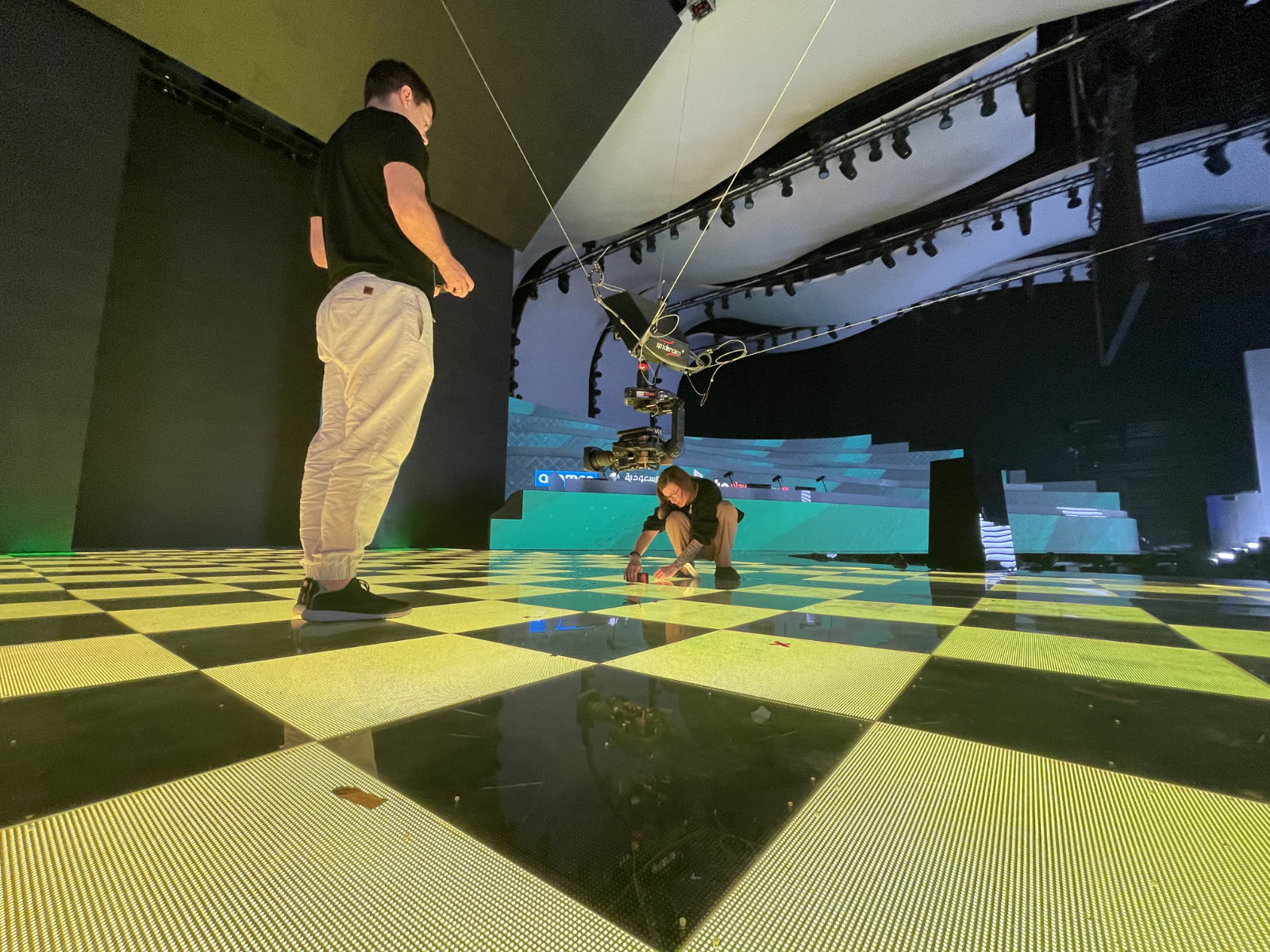
    And another thing SP was handling was the tracking data coming from the cameras, reformatting and offsetting the data to get the physical and the virtual worlds aligned so the AR looked correct. All of the cameras had a Stype Red spy system on, apart from the spider cam which had its own system. We had quite a few issues with the spider cam data drifting and needing resetting quite often which was a bit trial and error to start with but once everyone got in the swing of “how to make it look right” we were golden. The Spider cam tracking looks like it works great when you see it on a stadium size gig but for our purposes it didn’t really cut it for the accuracy we needed in this smaller size venue (more on this later).

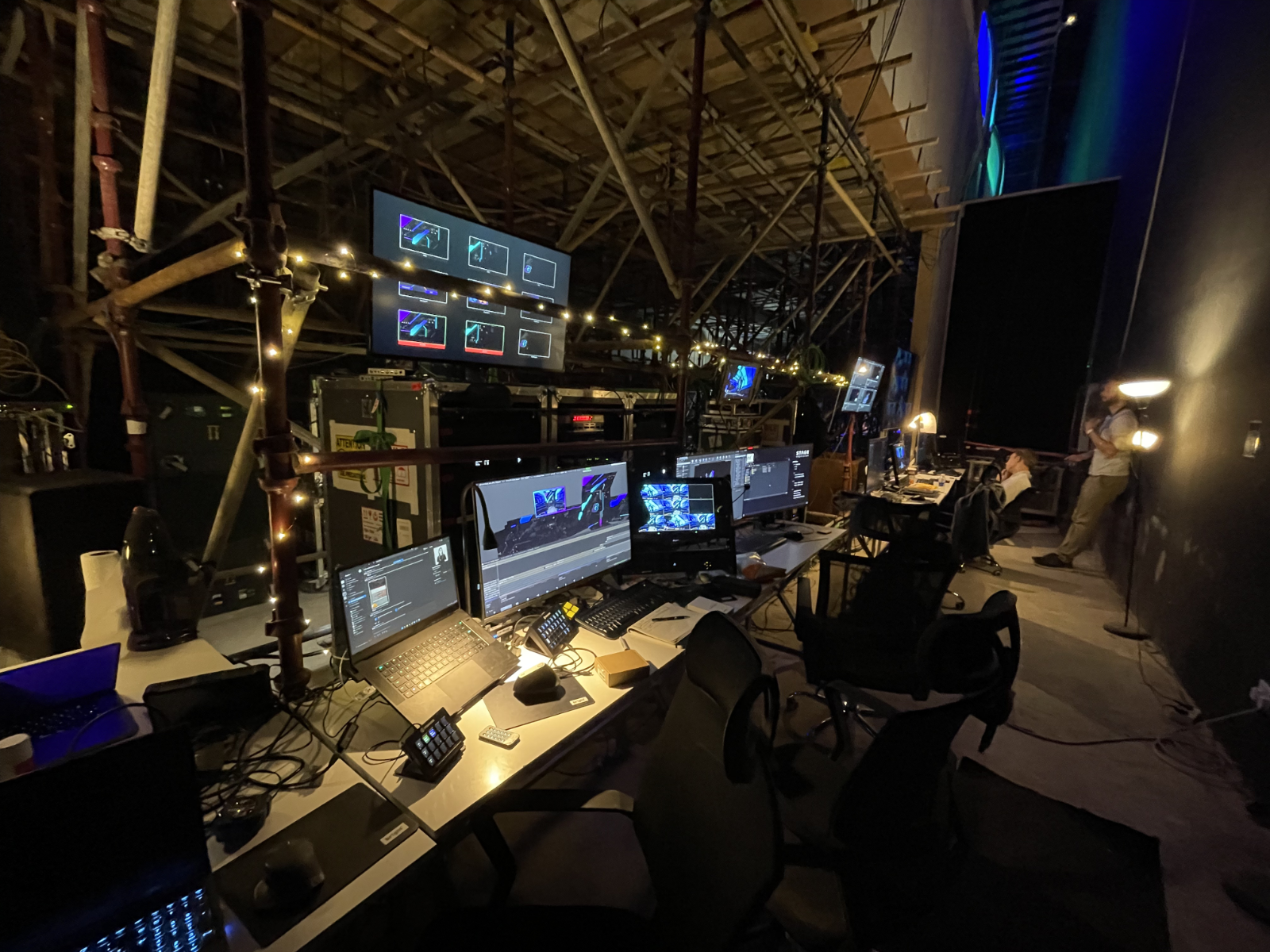
    This was the control position for year 1 in the same arena as the games were being played, we were behind the seating bank and as with most gigs in Saudi it was a building site for the first couple of weeks. Everything was continuously covered in dust and the temperature swung between hot and cold as the people who were in charge of the building tried to get the correct air-con setting.

    I was operating d3 on the gig which was delivering all the content to the led and rendering scores to the led via a notch block running over renderstream from RX servers. The notch block got the games score data from the API via SP and we also got indirections from the games engine API via SP which pulled up the correct player/team name before going to a particular cue. All of this was triggered by a button push on a streamdeck that sent a command to SP which then pulled infor from the games API and sent the relevant triggers to multiple departments.The whole system integration was complex and had a lot of moving parts, the above is just a few. And to those who are reading this who got lost in the terminology heres a breakdown.

    d3 : disguise media server
    Indirection : The terminology when send sending a file path string to d3 to display content in a video layer/module
    Notch : realtime rendering engine that can be played and procedurally updated within d3
    Renderstream : disguise’s proprietary system for sending a video stream over a network
    RX : Rendering machine part of the disguise ecosystem
    SP : Stage Precision live event and production toolkit
    API : Application Programming Interface, a way to pick up data from a computer program over a network.

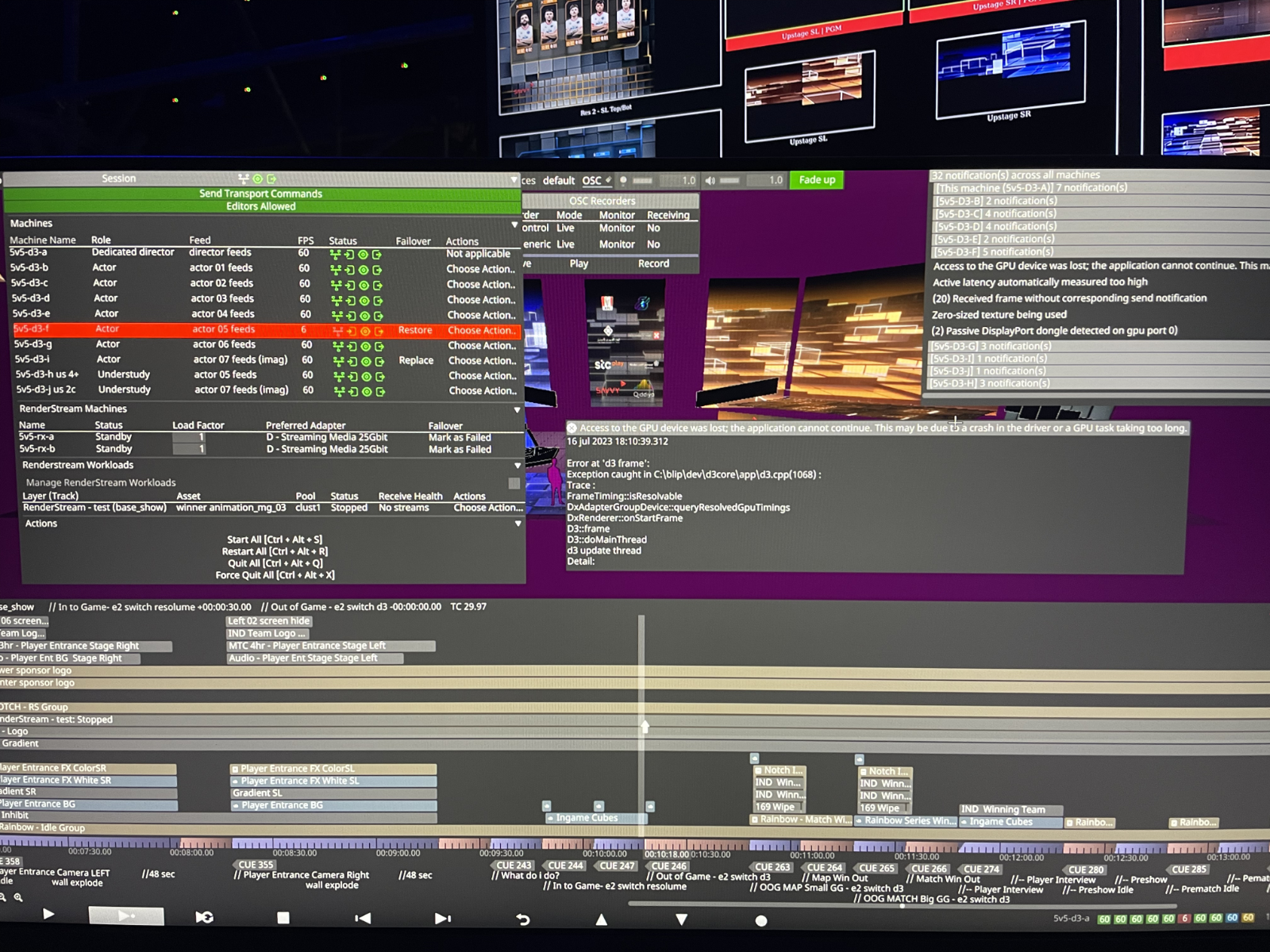
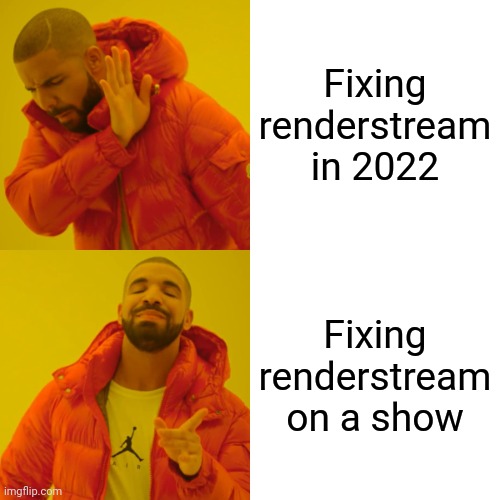
    Everything worked smoothly except renderstream which would crash and bring down the servers after running for around 5 to 6 hours and most of our broadcast was around 8 hours each day. The disguise devs were great and we spent a long time with them trying to identify the issue but it was never resolved. In the end we moved the notch block to run on one of the local Gx machines which worked a treat.

    Heres one of Krzystophs brilliant memes which helped keep us going

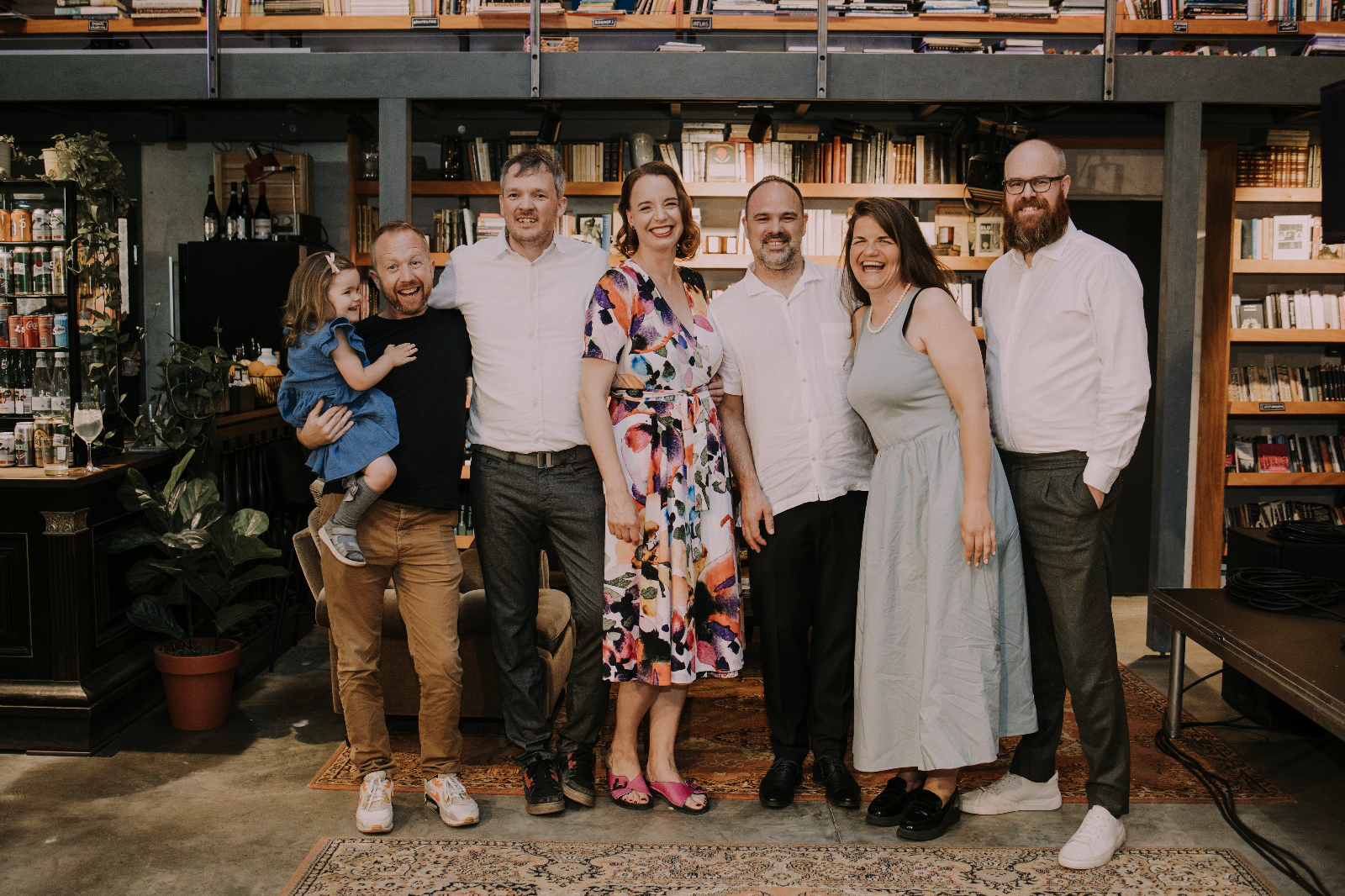
    That was a brief recap on year 1 of Gamers8 now we fast forward to 2024 where the event has grown considerably from 1 arena and 1 studio, in 2024 we had 3 x arenas, 3 x English studio’s and 3 x Arabic studios. Usually I’m out for the setup for this but this year Matt & Pillerin were holding their wedding party which Kristaps & myself were attending. This meant Kristaps, Matt & myself didn’t go out until 10 days into the setup which as were all kind pleased about. The celebration was really nice, we all met in Tallin, Estonia and enjoyed a great party and generally just hanging out

    Happy smiley faces!

    After flying home from the party, repacking and sorting out the flat I was on a flight the following day to Riyadh, with a quick stop in LHR where I met Adam for the next flight and we arrived in Riyadh late that evening. The following day we all met the team who had been here for the last 10 days and heard all the horror stories of the site not being finished which still didn’t really prepare us for when we got onsite and seen ourselves how still unfinished it was.

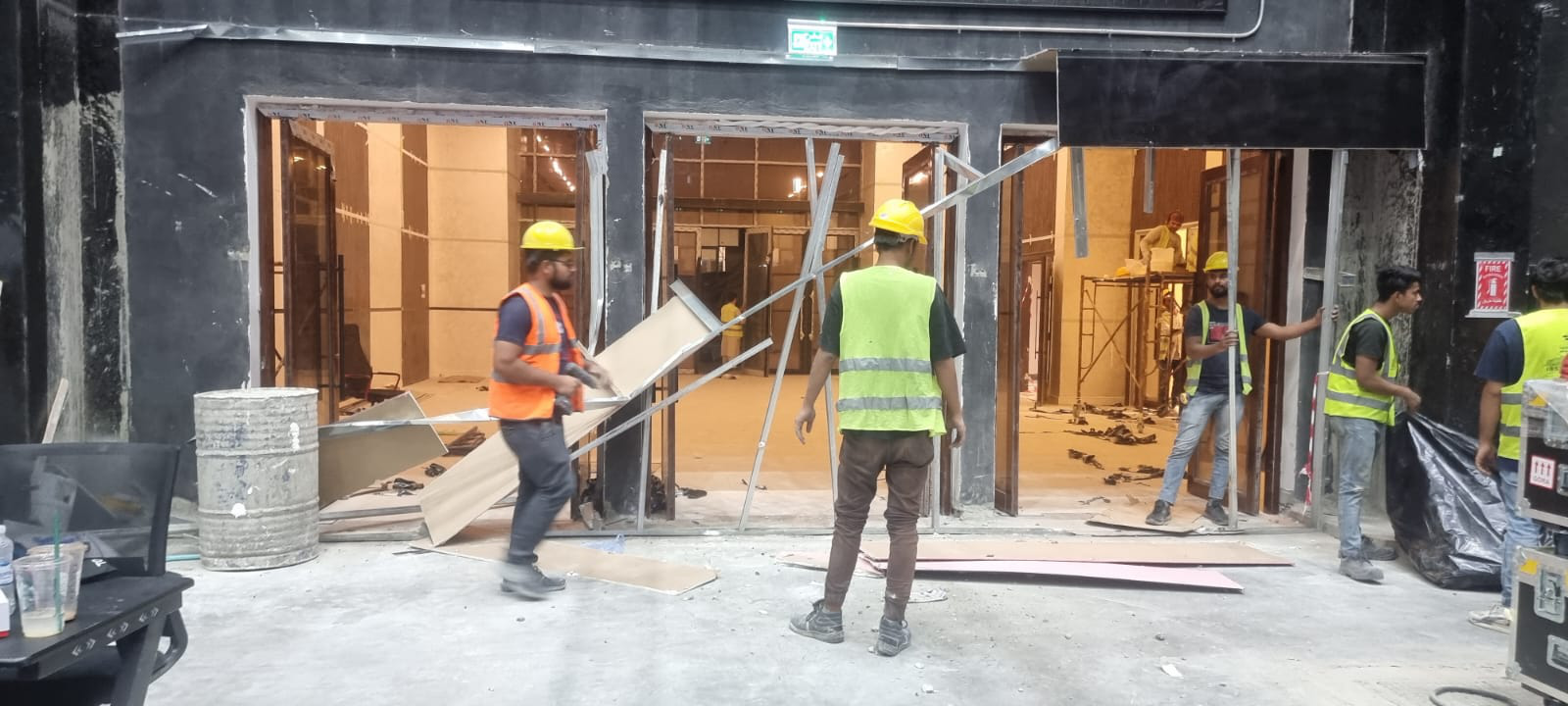
    The building was sill being built when we got there, windows were missing, the toilets were still being constructed and the air-con didn’t work. It was at this point i actually realised the extent of the shitty environment the guys had to endure for the first couple of weeks before we got there and they had done a great job managing to get everything in.

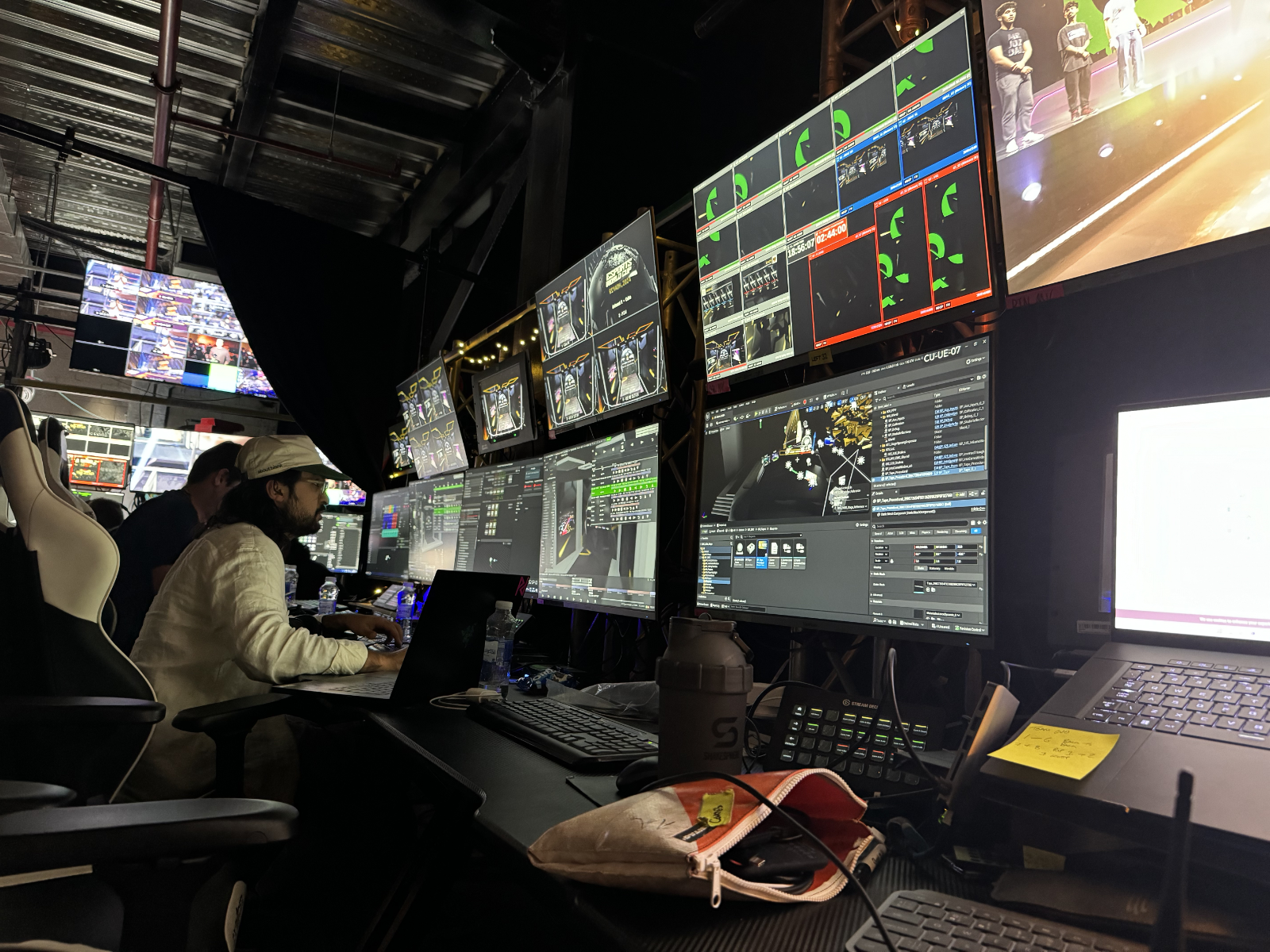
    View to the left of my control station with Ufuk working on one of the studios.

    In 2023 all the operating positions for each stage were in the same arena that the stage was in, either operating from behind the set or behind the bleachers. This year we had a unified control room with the servers at the stage and all remote KVM to the operating positions. Being in one space had its pros and cons, it was nice that it was quite social being able to see each other and bounce ideas between us. The down side was that the space was just too cramped and got quite noisy, nice idea, just needed more space.

    View to my right featuring Nate and Kris

    For the first week we were onsite for one day, off for three because the content wasn’t read then back in for the remaining 3 days for some frantic programming and collectively figuring out how the show should opperate and fit together with all the other departments. I think it was on the 4th f July we were meant to have our first full rehersal with all departments but that turned into a slow stumble through. Everything was delayed generally hampered by the building flaws the general struggle to get things done in the Saudi environment

    Screengrabs to verify Triggers

    Rehearsal’s, once we got into the swing of them were supper slow, there had been constant changes between different departments and quite often early on these changes weren’t relayed to everyone. This mean that when I hit that button on the stream desk it didn’t always turn out as expected. Sometimes the wrong states/character’s were being displayed and I spent quite a bit of time on coms with he various departments figuring out if we were sending he wrong command or they had programmed the wrong “pickup” at their end.

    Eventually we were all lined up across departments and things were working as expected, the AR looked great so crisp and the tracking was really tight. I was there for only 2 weeks of games which was enough. All of the interesting and challenging stuff happens in the install and set and after that I just became a button pushing monkey with a bit of managing communication between departments.

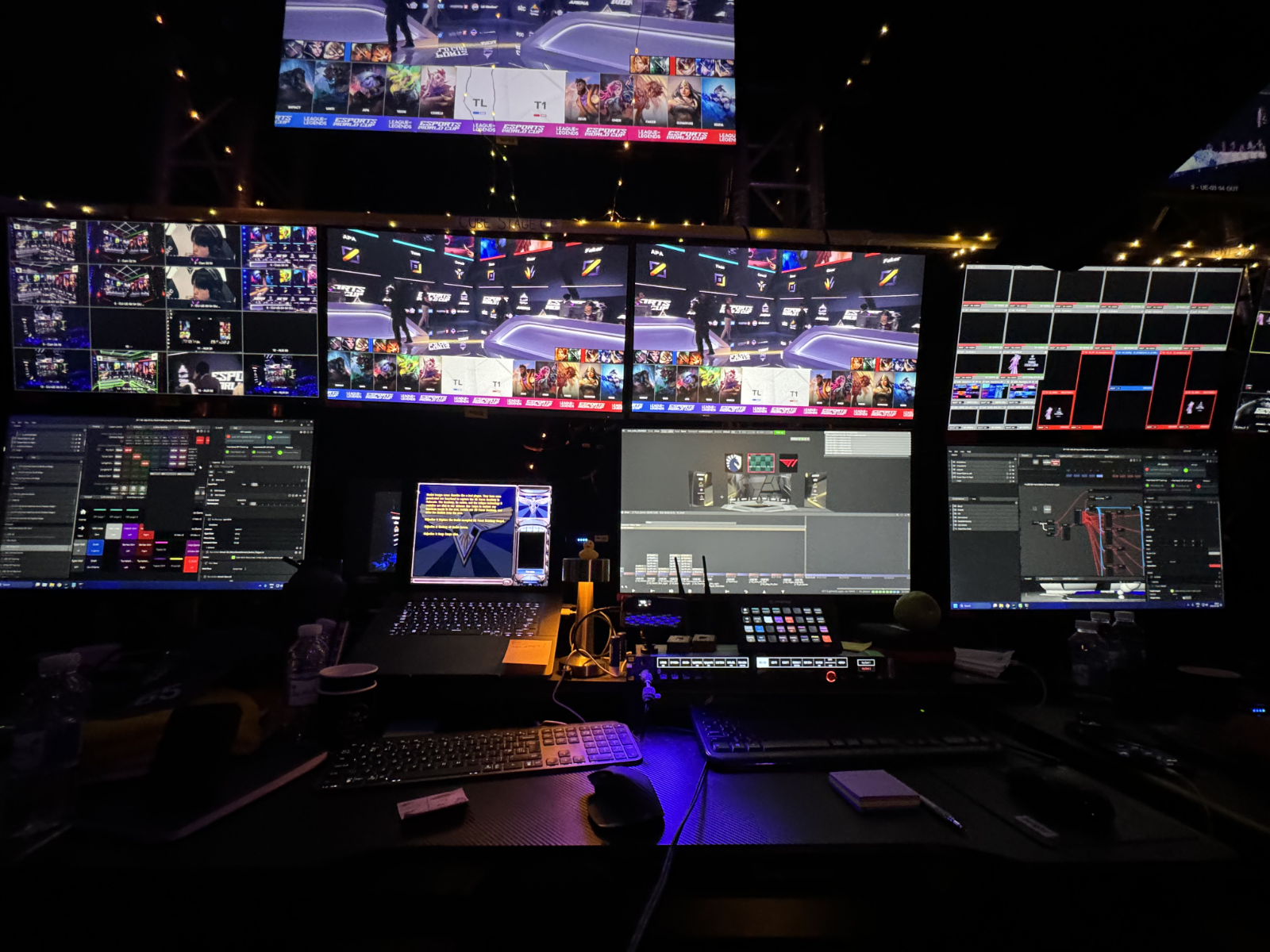
    Cube Stage control, my work view for 3 weeks.

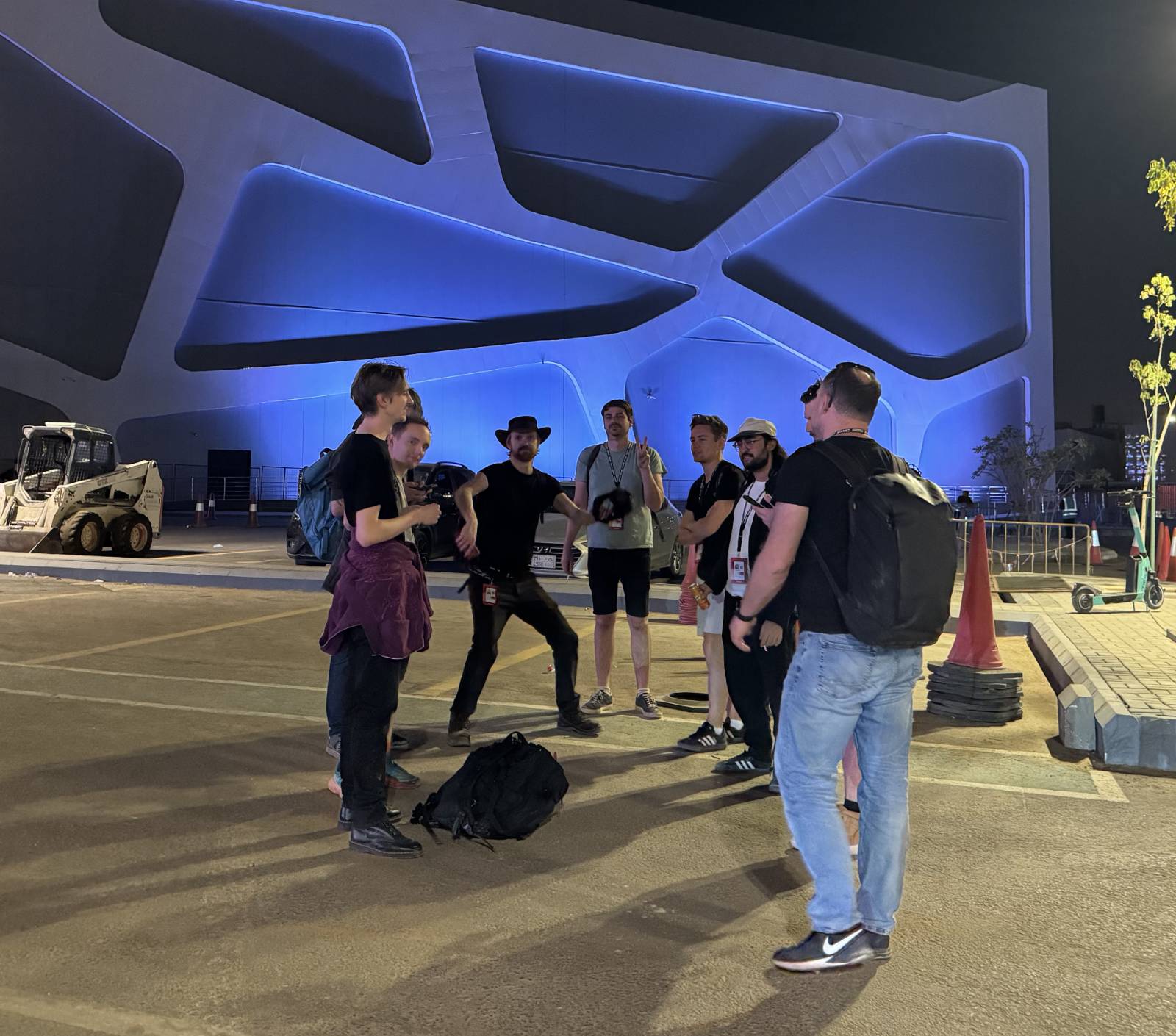
    It was a good few weeks working with friends, making new friends and hanging out in an dusty parking lot between construction equipment waiting for Ubers.

    Rury doing the where’s my uber dance


    No comments on EWC with Bright Studios
  • The Eurovision Post

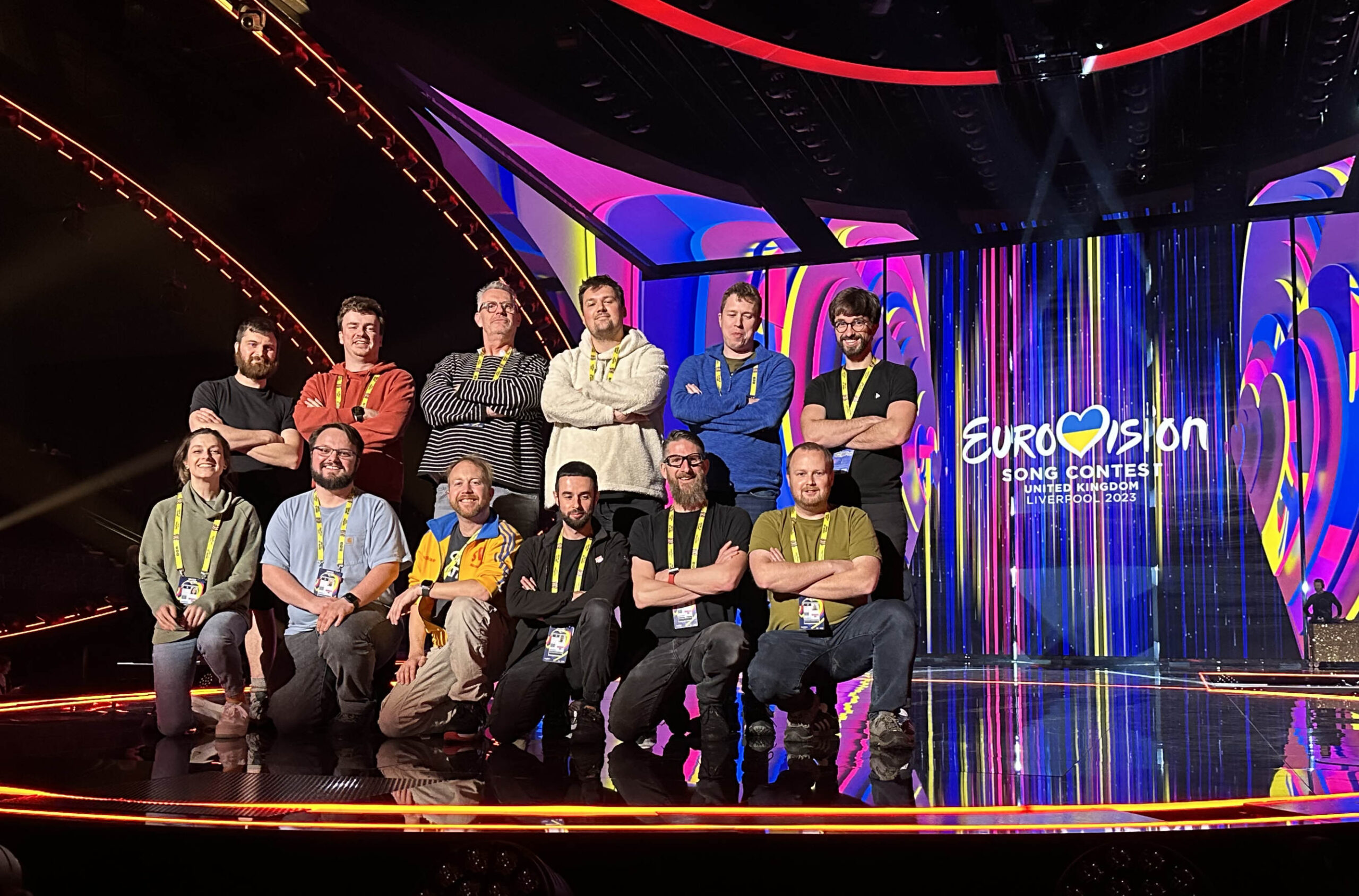
    It must have been around February 2023 when I got a call from Chris asking if I was up for being part of the video programming team for the Eurovision Song Contest 2023 in Liverpool. I of course said yes, not only because it was an exciting gig to be involved with but more-so I knew who else was on the team and it was a bunch of folk I love working with.


    This year the UK was hosting Eurovision on behalf of the UK and the venue was Liverpool arena. For the event the spaces in the arena that were usually used as offices for the day to day running of the complex were cleared and kindly handed over to Eurovision for the duration of the gig.

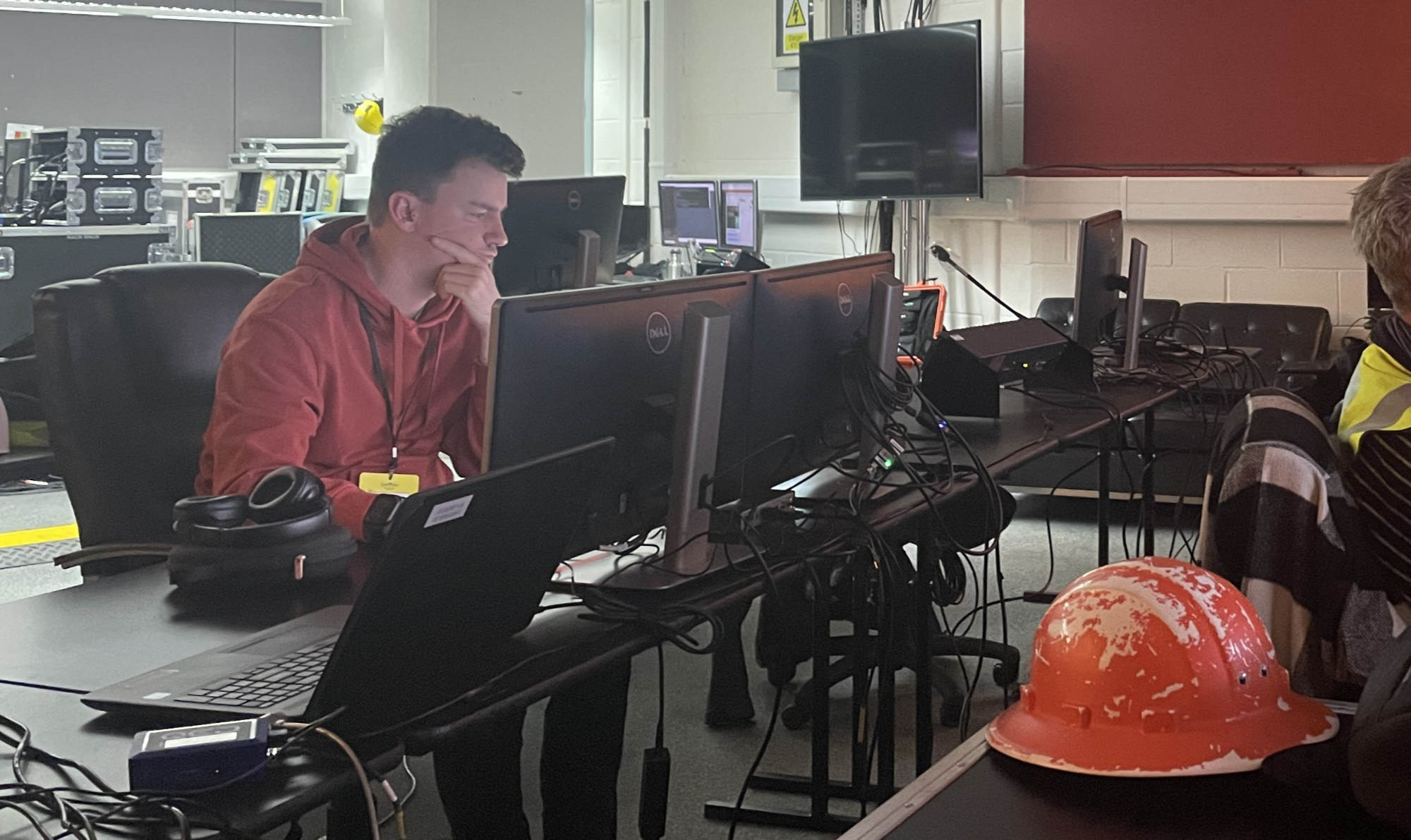
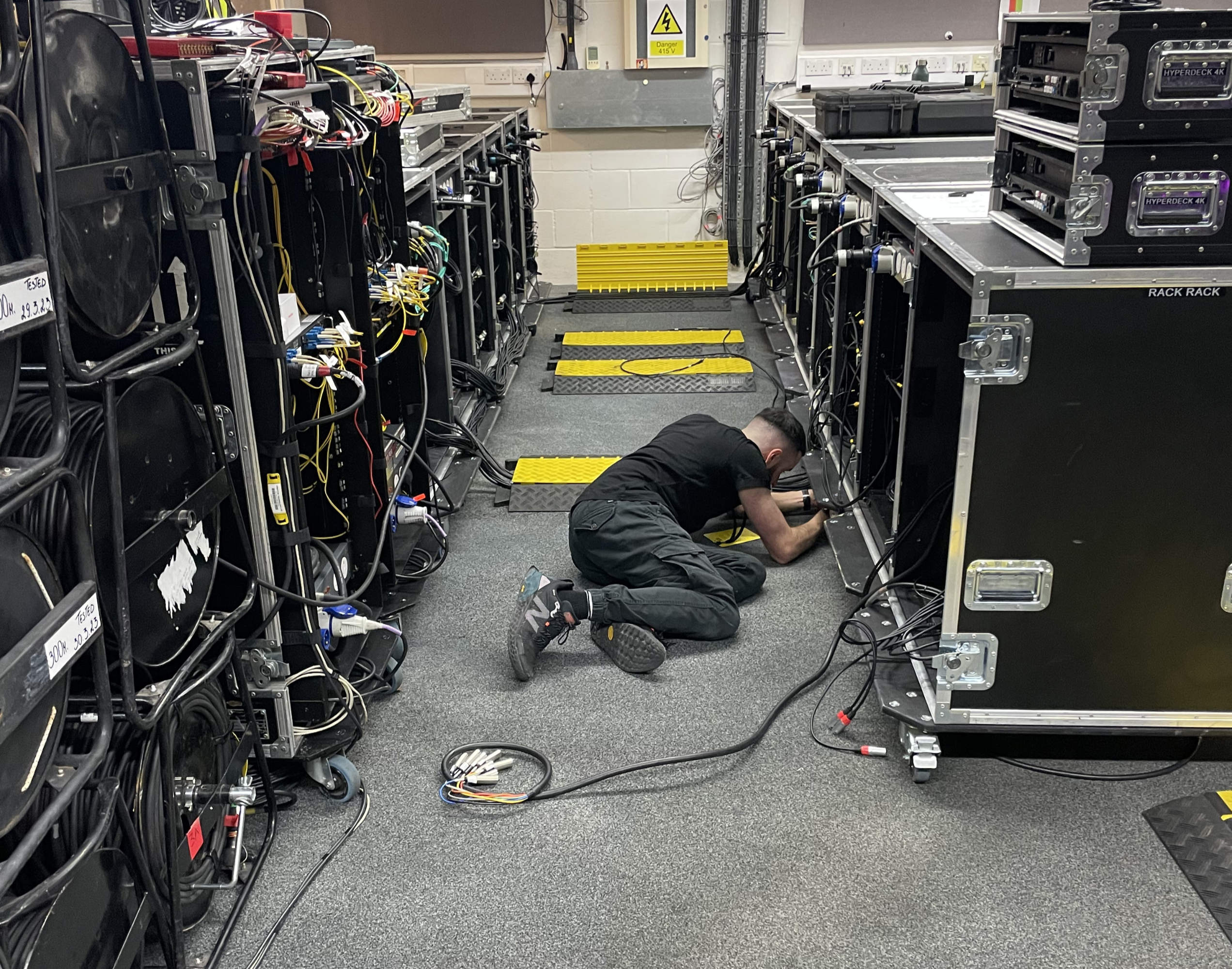
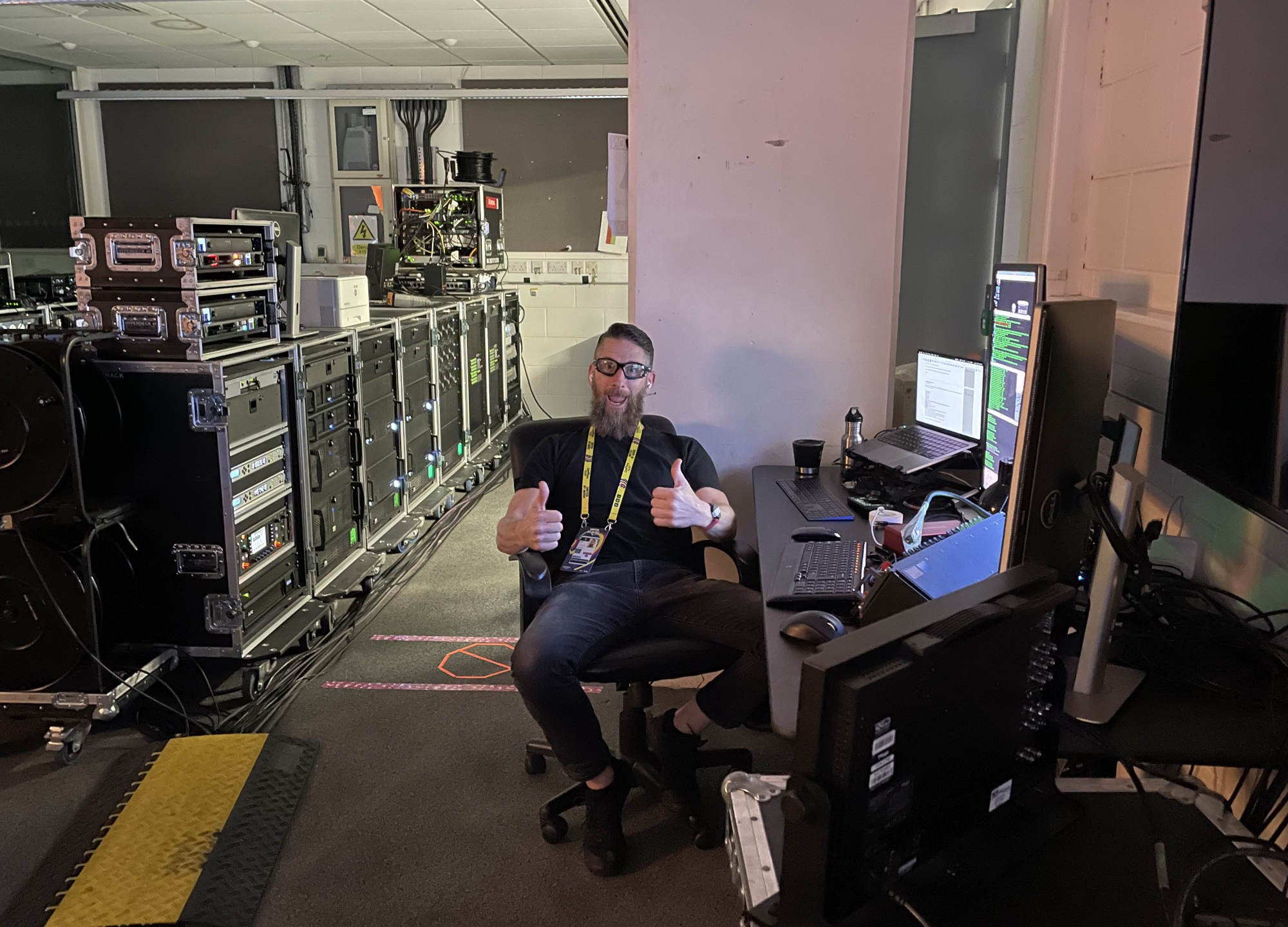
    Harry(Hazza)R, DanH, AlexP, DanL and MikeS from QED were onsite with us doing a sterling job of getting the system in and keeping it up running. We had a boatload of disguise servers for the massive led screens, several projection elements for the show and also Luke, Jack, Sam & myself had a dedicated server each as an editor for system consistency. Ed was also on the team and in charge of media wrangling for all the content that was coming in from various providers.

    Dan & Harry had set up a nice system for each of our programming stations where we had a stream deck triggering presets in a rack-mount audio mixer which was routing the different timecode sources and audio to and from the editor machines. This meant we could each be independently programming parts of the show using the shared audio tracks striped with the relevant timecode played back from our local machines. It was a really nice clean solution and helped speed up the workflow being able to instantly switch and listen to TC and audio sources so quickly.

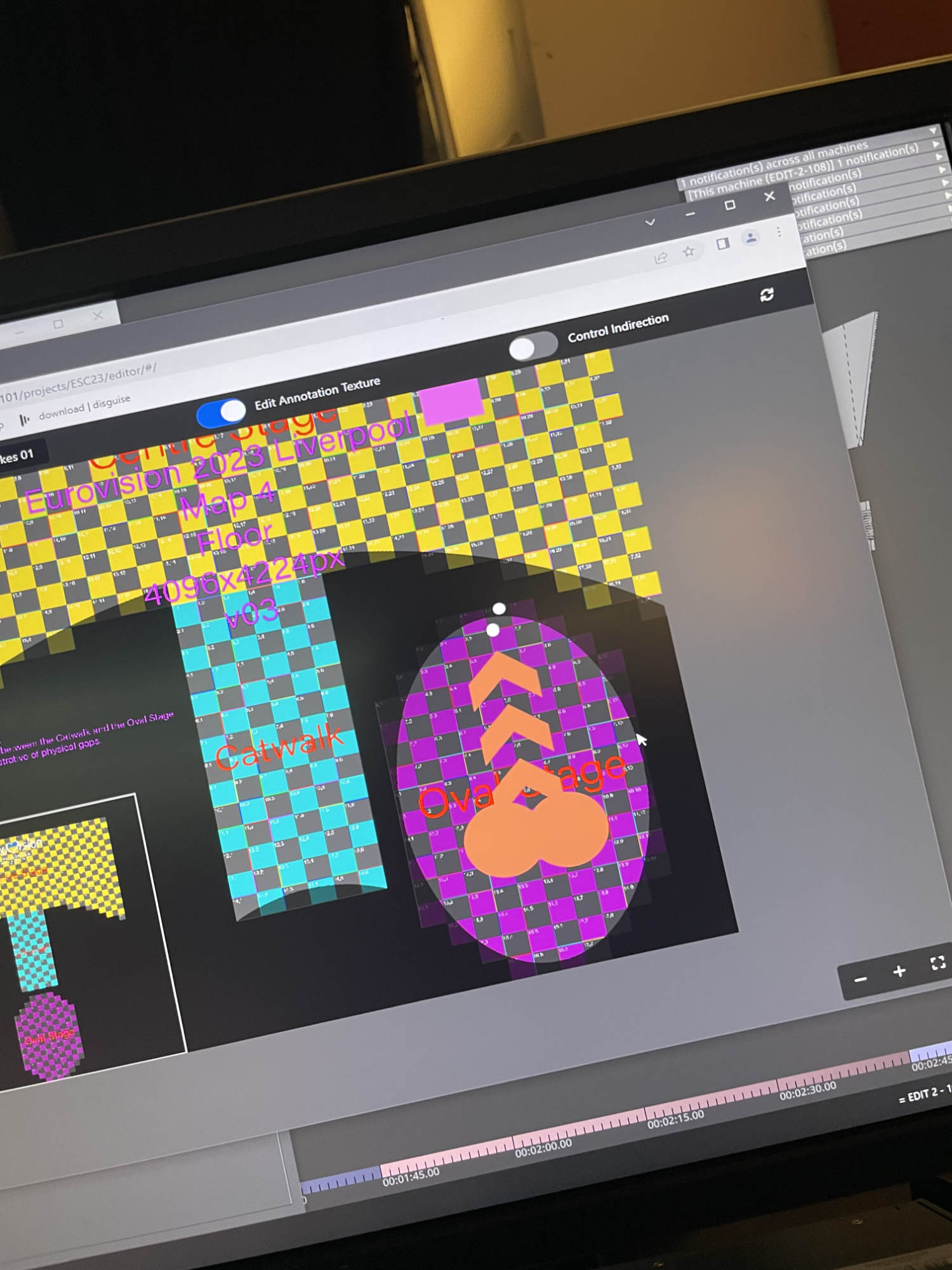
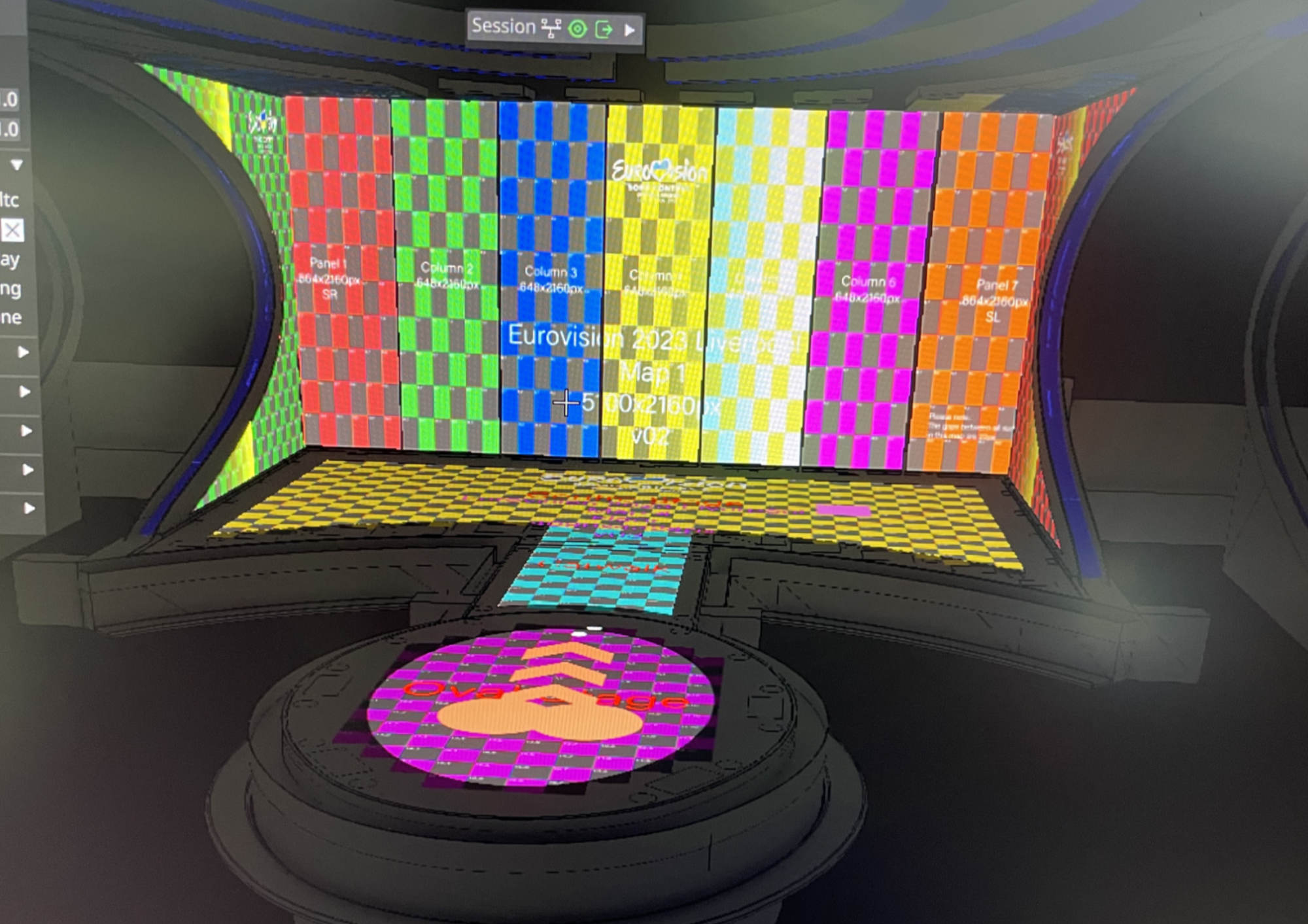
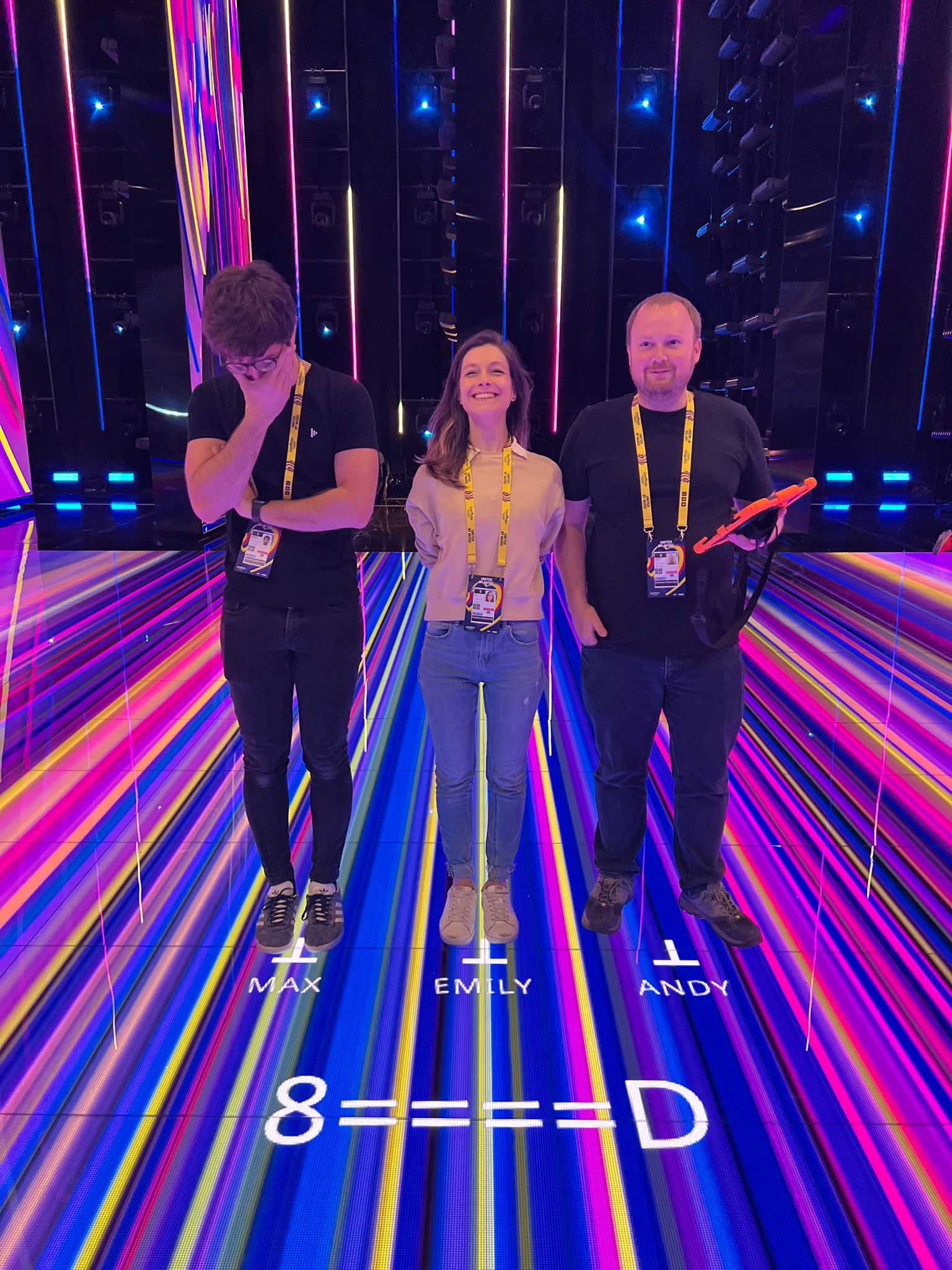
    Also part of the team we had Emily, Brigsy and Max from d3 who were onsite with us for support and implementing the spike mark system for the event. The spike mark system was a nice elegant solution where the stage management team who were onstage with ipads were able to notate positions on the led drawing various symbols. These could be saved as snapshots/presets pushed on the server sending signal to the floor. Emily and Brigsy had developed the main core months previous to us loading in and were constantly adding and improving to the system onsite. The first time we had a try of the system onsite it was really intuitive and we (I) came up with this.

    I wasn’t the only one drawing speed dobbers onstage, here are team d3 looking proud, apart from max who isn’t as childish as the rest of us.

    The d3 programming part of the show was pretty smooth and we had enough people to handle the work during rush times so there was no real stress moments. When content came in we divided the work to program individual tracks, sync the timecode tags and check for errors. Most act content came in as single tracks but there were a few that needed sequencing and some with camera perspective tricks that needed care and attention working with the director and cameras to get it looking correct. Luke was lead programmer pulling in the individual programmed tracks between us, assembling the final show timeline and sitting in the hot seat for the show.

    In addition to the content on screen for the competition performances we also had content fir the presenter looks, the flag parade and the interstitial performances which happened between some of the songs. For this we had a team from the lovely people at Northouse who are always great to work with. There was quite a bit of sequencing i needed to do for this as there were many requests for changes in the content from above so we were receiving small sections at a time and adjusting timings as and when the audio tracks changed.

    Try and find a picture of us all with northouse to go here.

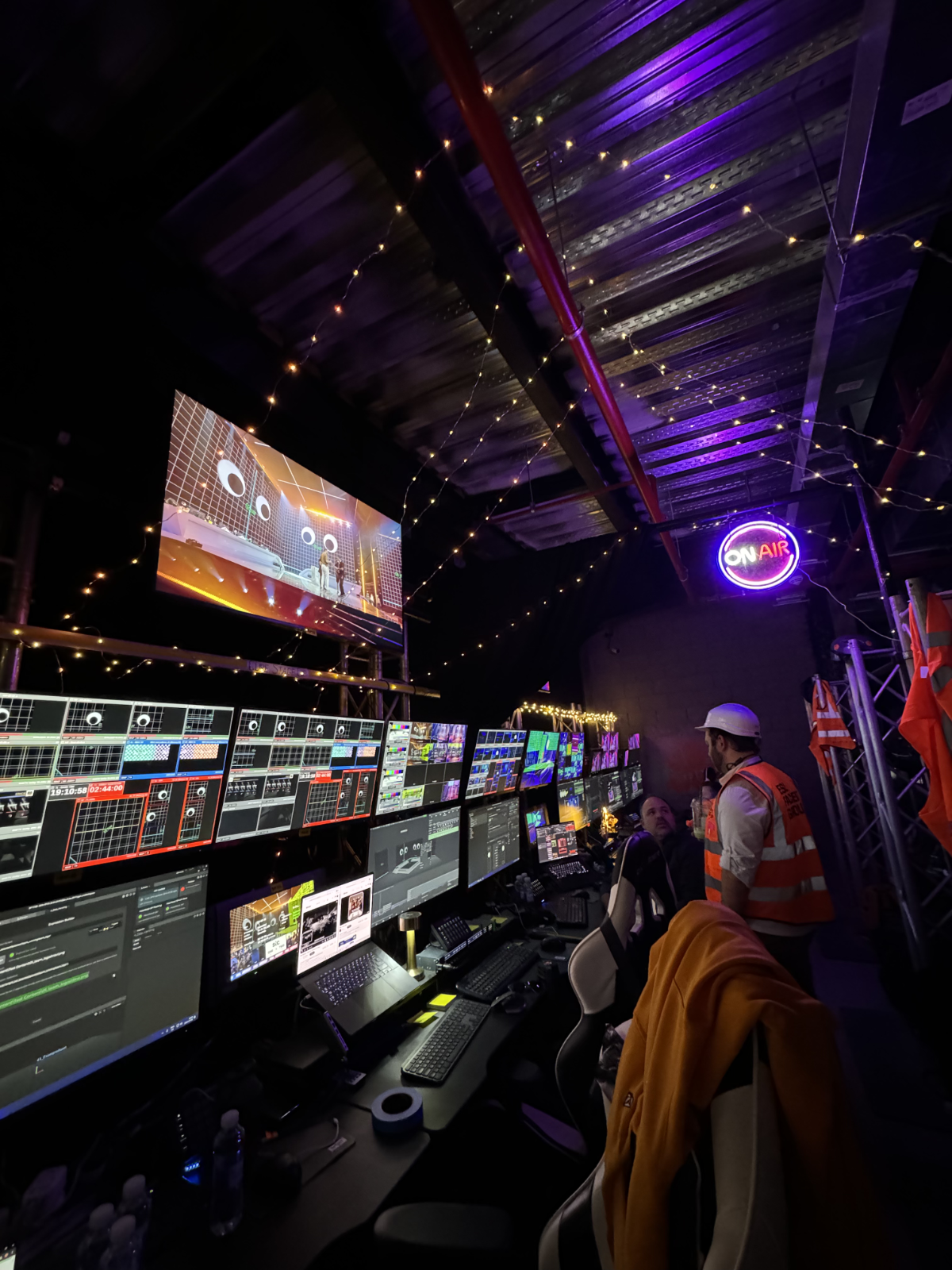
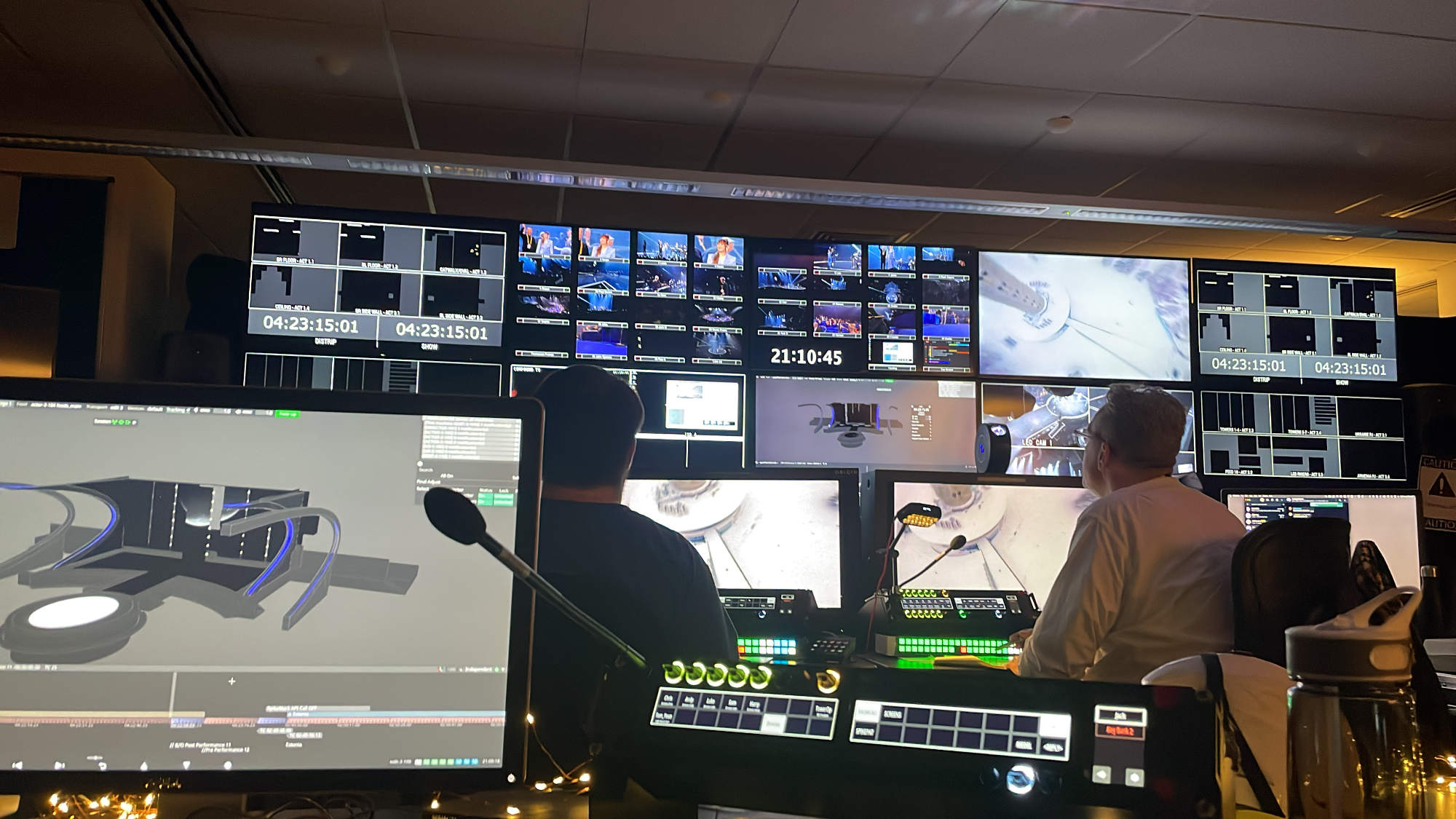
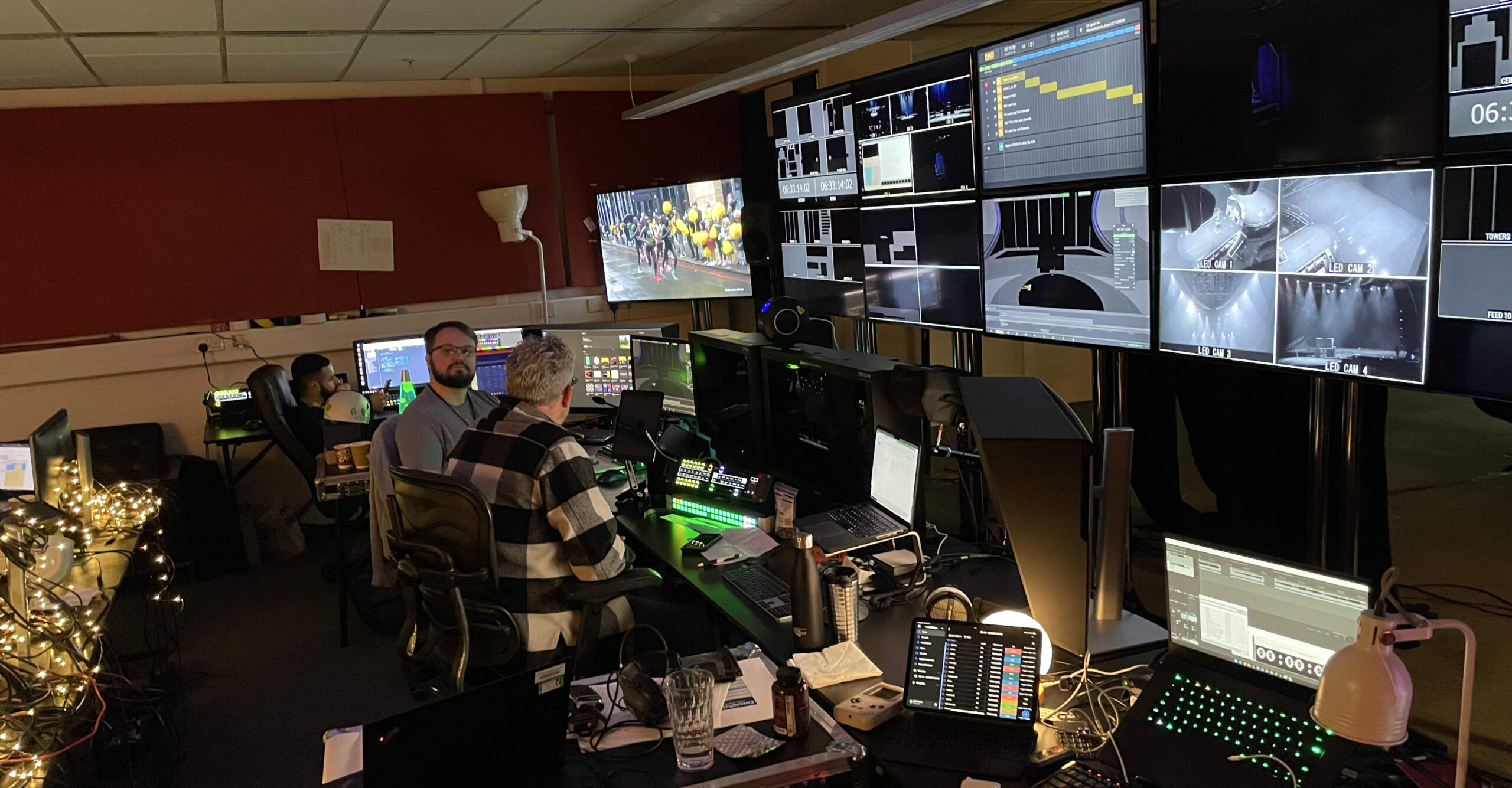
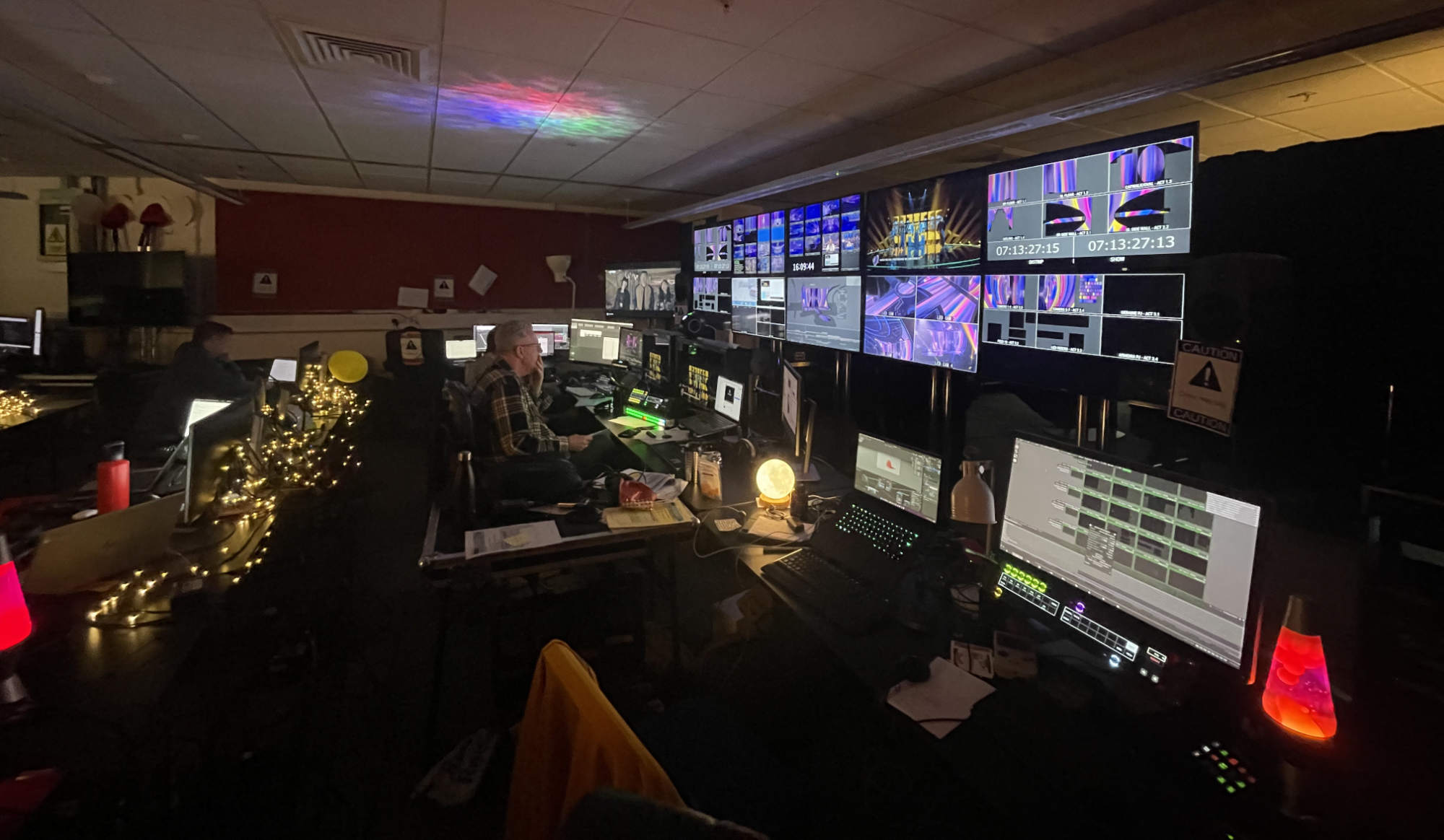
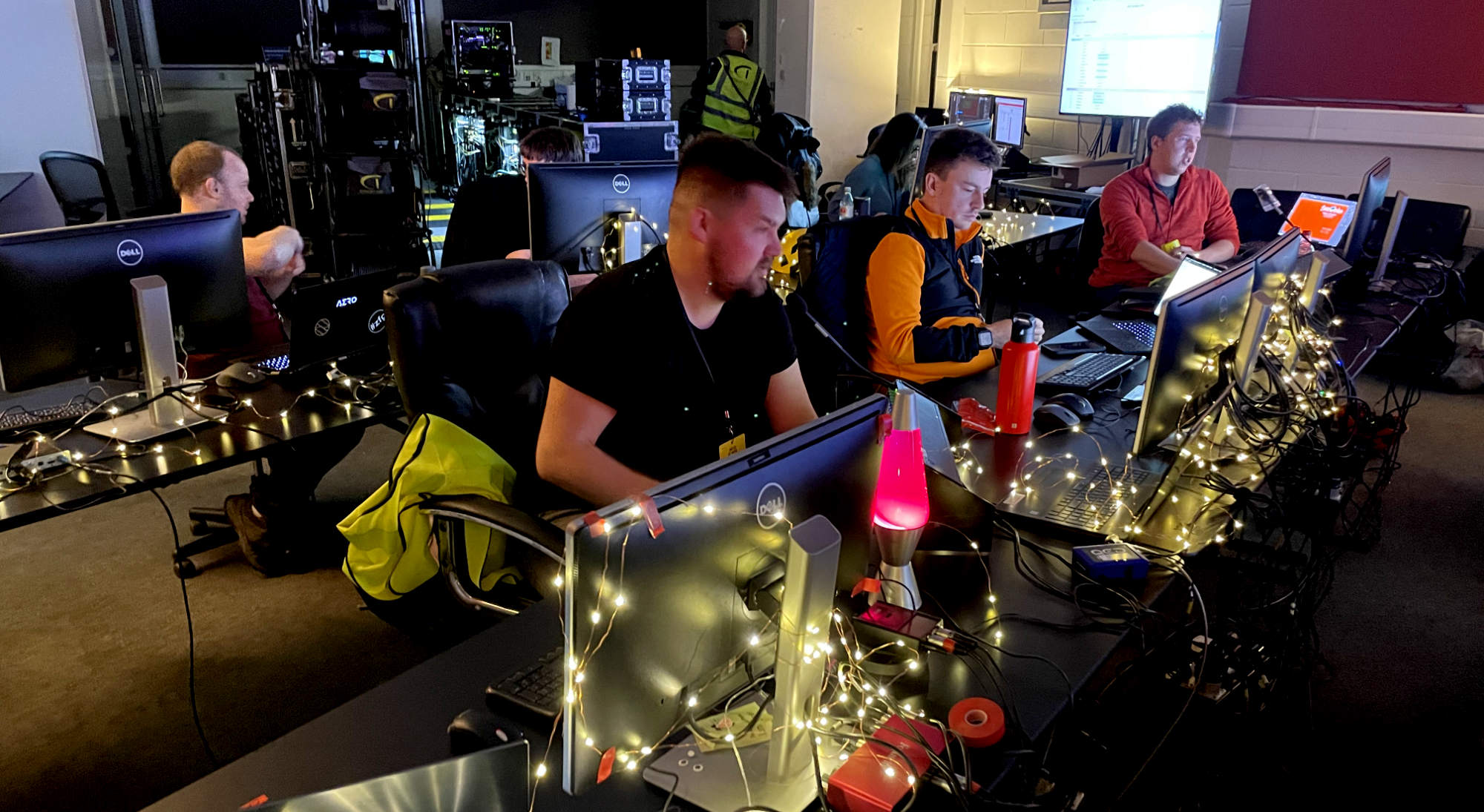
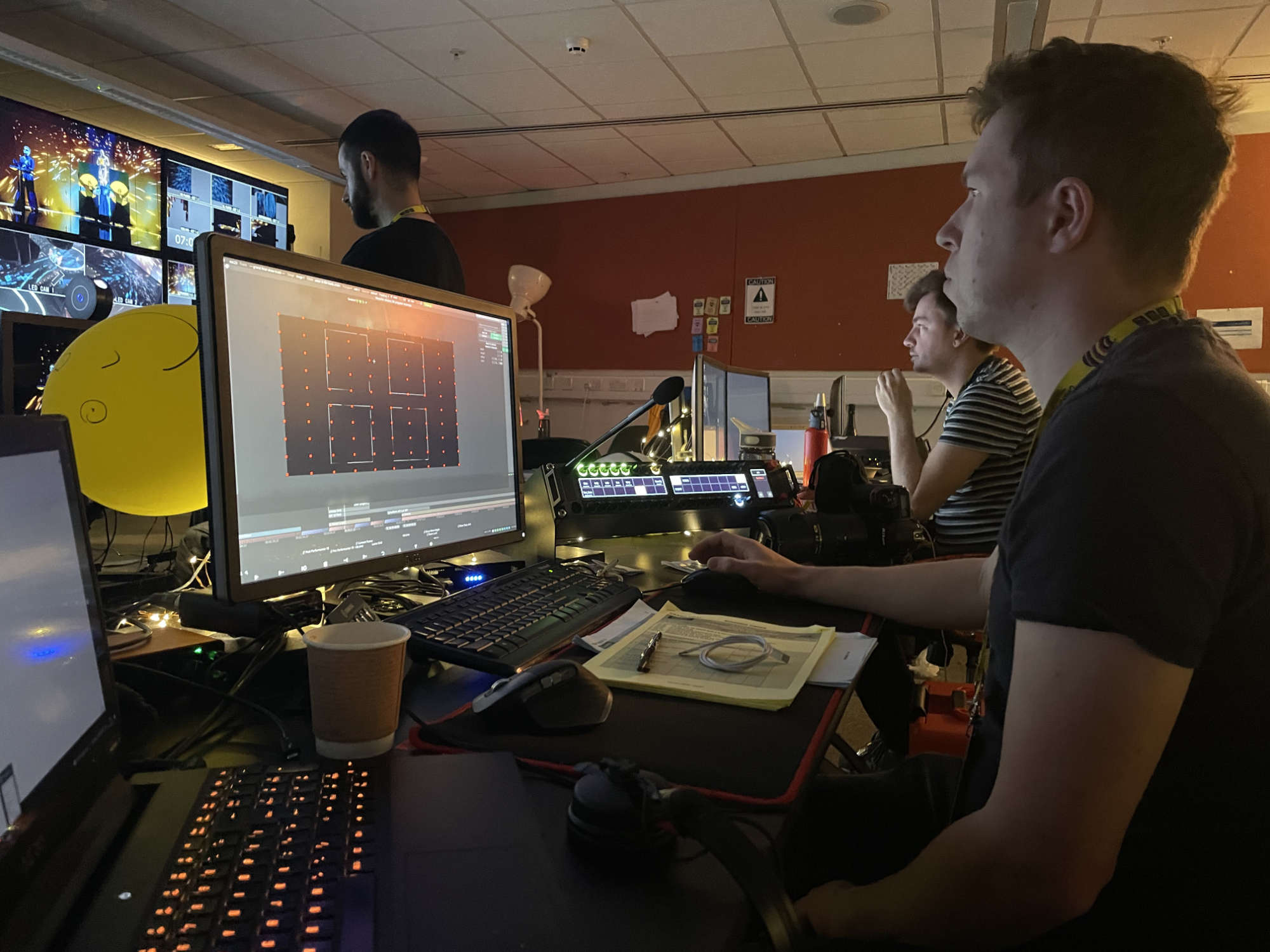
    I always try to create a nice working environment when on jobs and im a big fan of having ambient lighting around the office, so during the first few days i distributed fairy lights around the team to decorate the desks and also bought a few lava lamps for the mood too. Chris joined in on the fun too with his northern lights ceiling projector and a scent machine to make the office smell like a cheap spa.

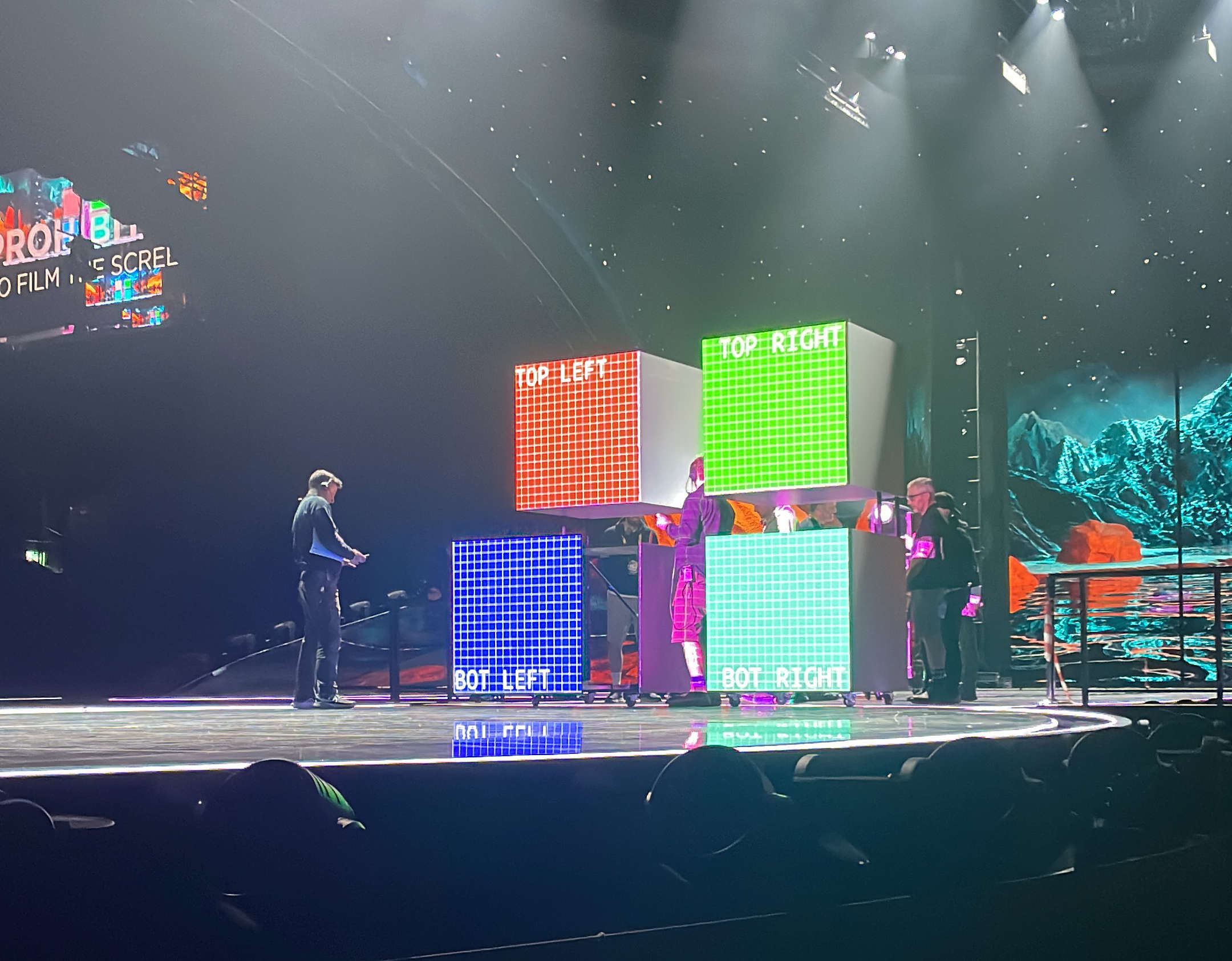
    We had 2 projection gags during the show, one for Ukraine and one for Armenia. The ukrane set was wheeled onto stage and the alignment had to be spot on to avoid any spill and also it was tightly mapped to the choreography. After a few teething problems hetting the set on and off and set in exactly the right position the stage mangent team were really good at hitting the mark with the set.

    Even though the stage team got the location of the set spot on there was always room for tweaking and during to the show Jack was tweaking the lineup via a camera shot in the short turnaround before the number.

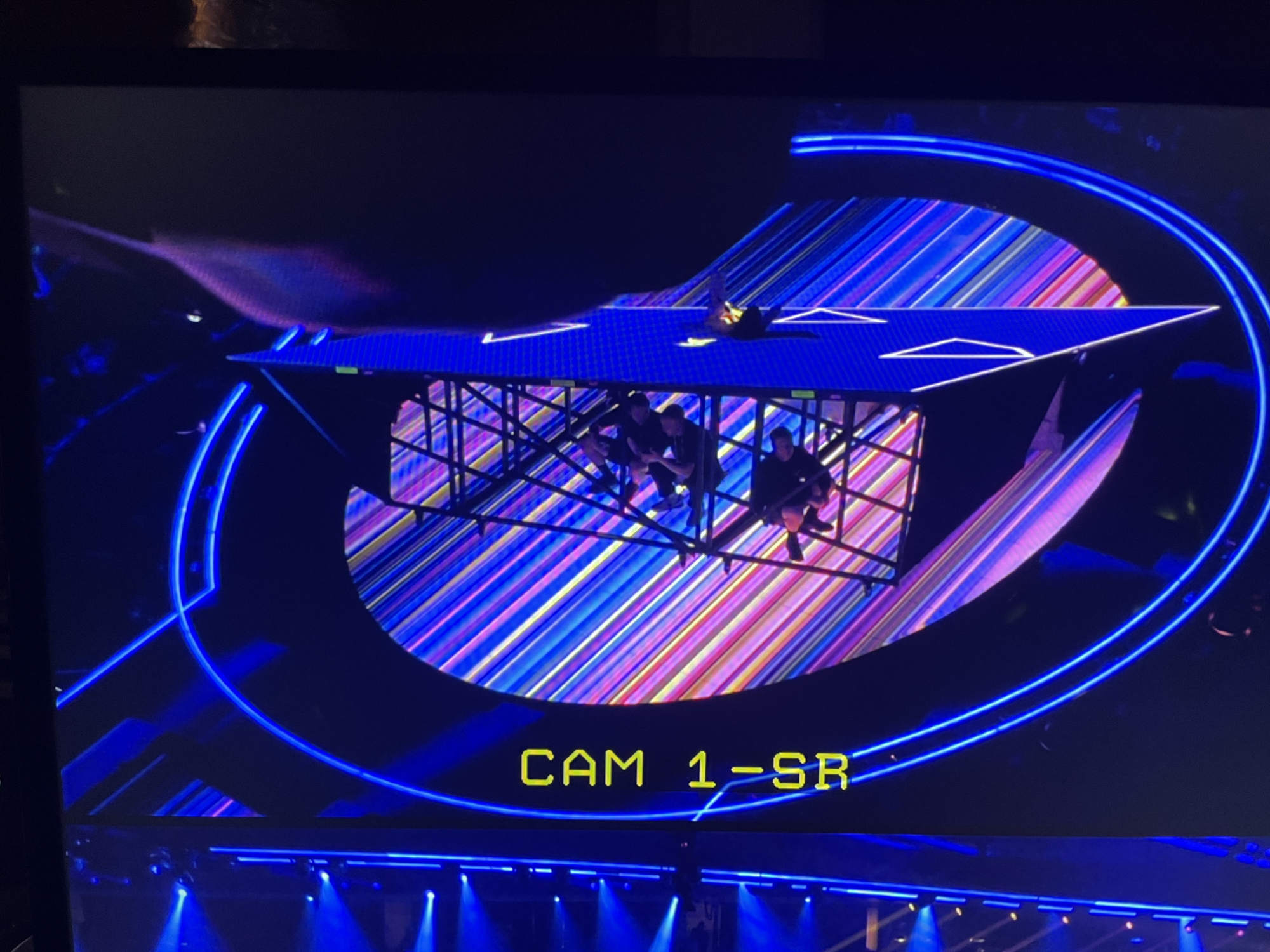
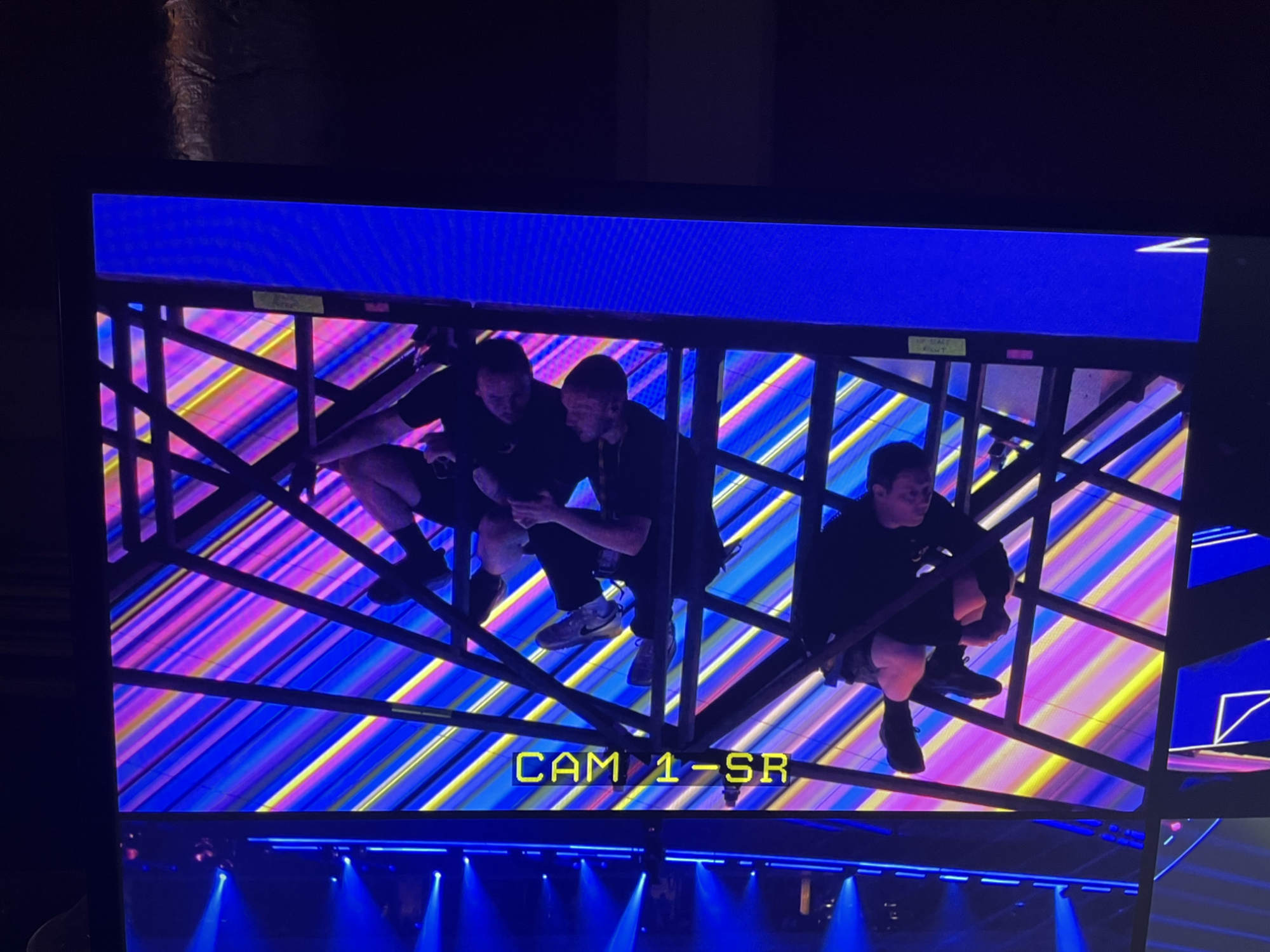
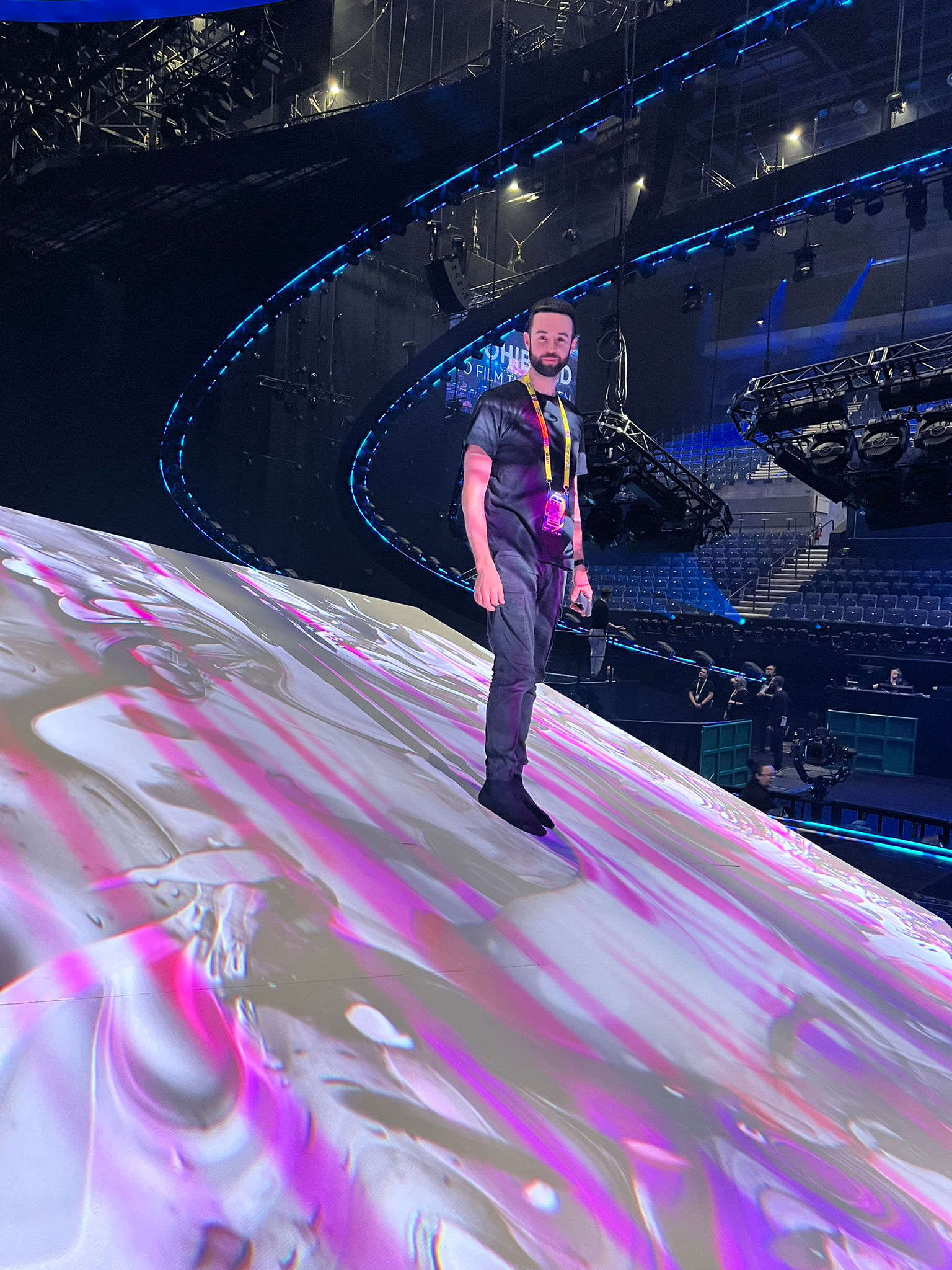
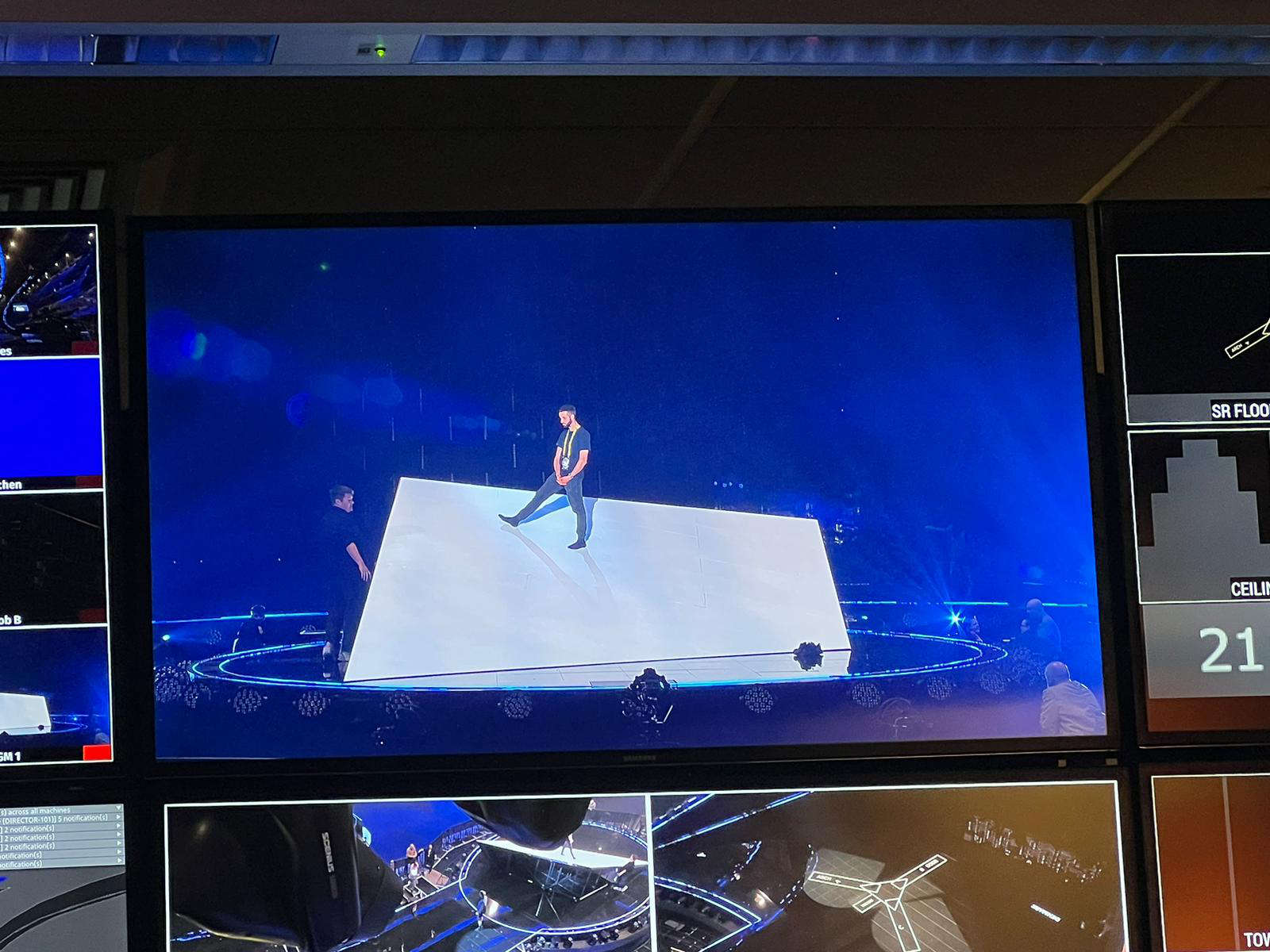
    The other projection gag for Armenia was a trapezoidal’ish shaped ramp that the artist was standing on, in the projection. For this the set was made up of 2 pieces and the crew wheeled it onstage, stayed under it during the performance and wheeled it back off, it was brilliant to watch.

    Heres an image of harry on the ramp being a stand in whilst the projection was beign focused and tested.

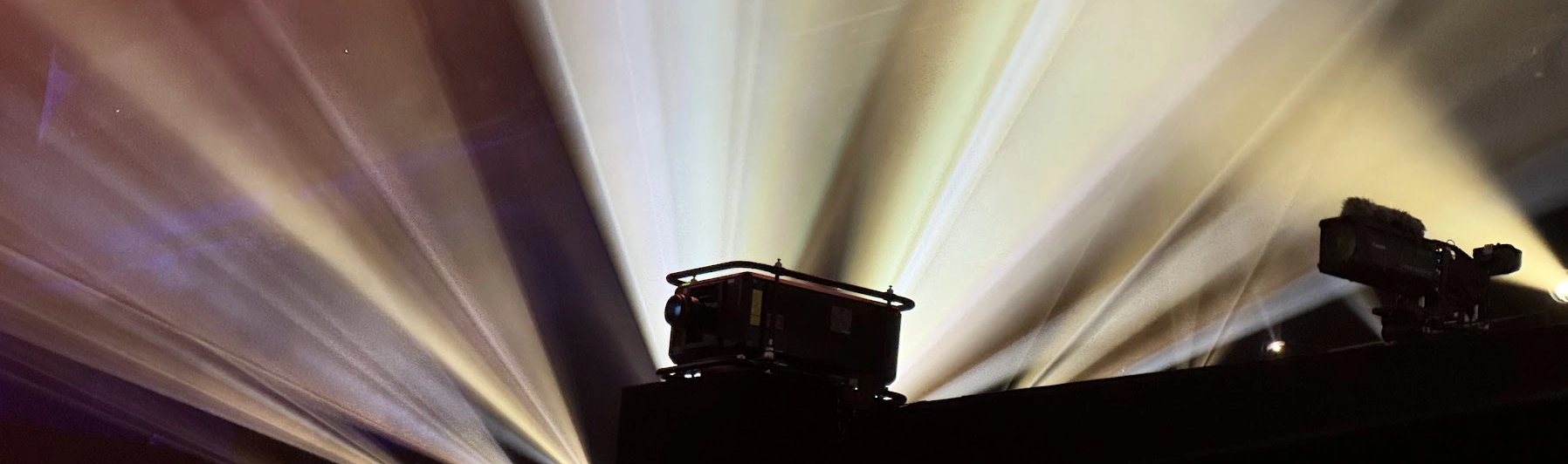
    We had a 50k firing at from around 80m away at the set piece and it was so bright with no problem of being washed out by lighting.

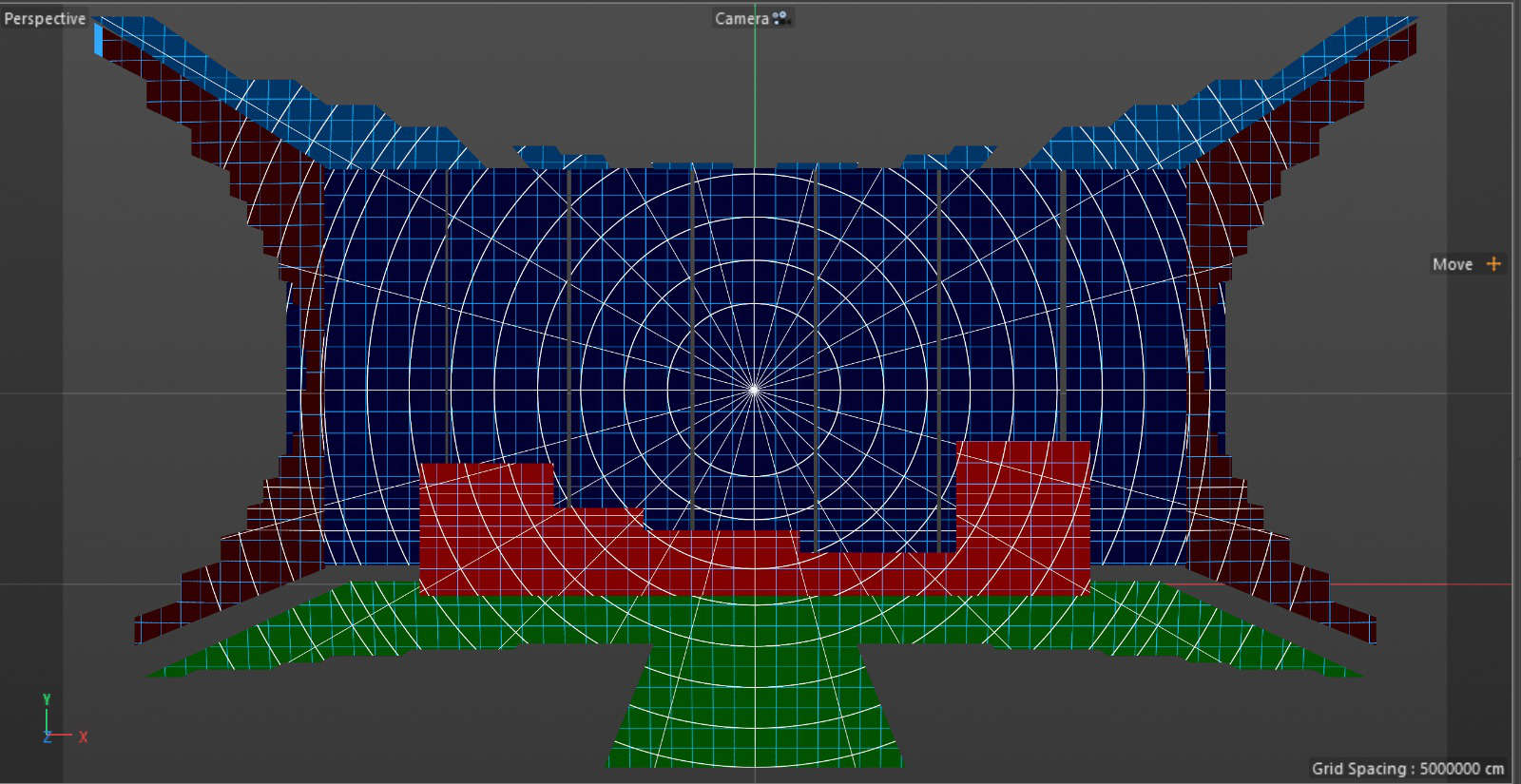
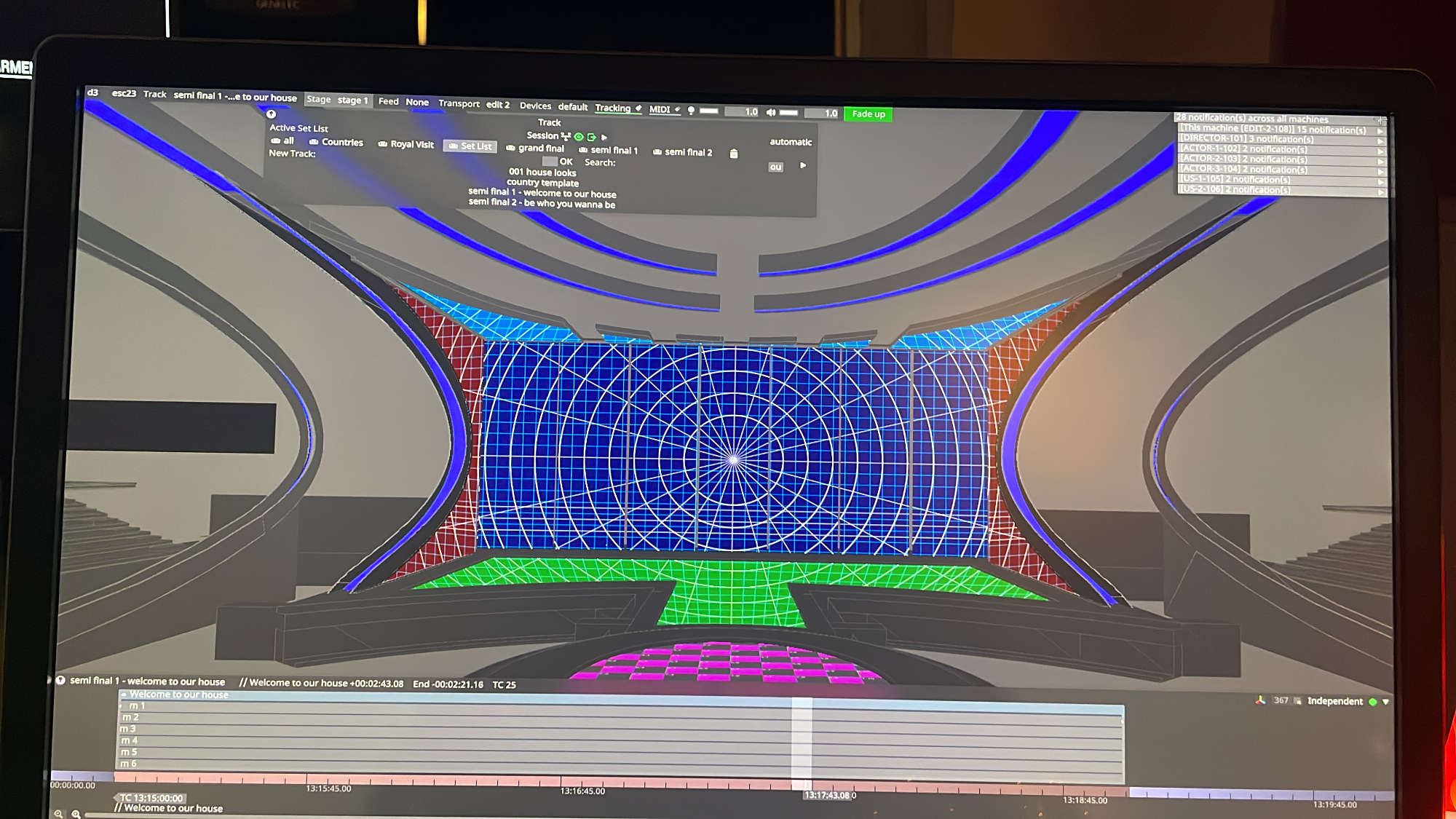
    In addition to the projection gags we also had a couple of forced perspective gags for an interstitial performance by Ukraine and content from Freckled Sky, the other was for the UK entry. The Ukraine pwerformance calles welcome to our house was a beautiful piece with two dancers performing against led backdrop depicting what was going on in the Ukraine at that time. There were several tricks in the content and choreography where through the camera when the performers walked behind a slab of led it looked like they continued into a virtual world as the content carries on their movement and silhouette.

    The content was rendered out from a “hero shot” perspective where we had to map onto the virtual set in d3 and then this was displayed on the physical set. We then also had to work with the director and camera department to match as closely as possible the physical camera to our virtual camera, position and focal length.

    Below is an embedded video of the performance which helps visually show whats going on much better than I can describe.

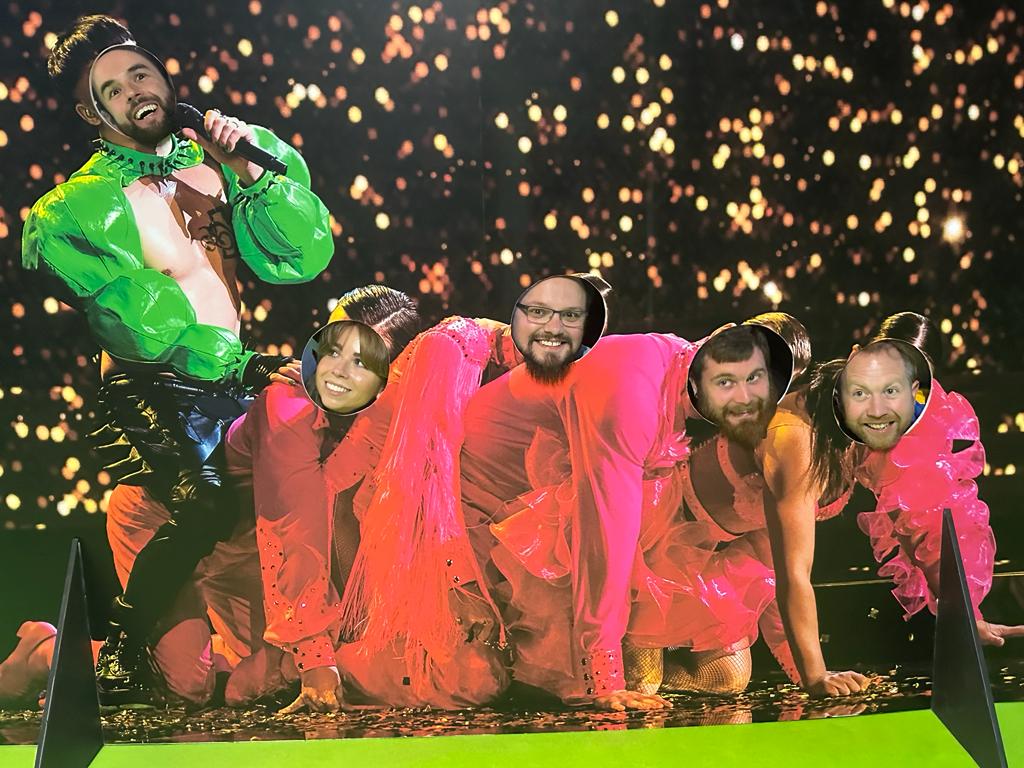
    Id never really watch Eurovision for many years, I do remember watching it as a kid but this was the first time in ages that I was actually mentally invested in the competition. Between all of us there were 2 clear favourites that we were routing for and those were Croatia & Finland. Outside the venue Croatia had a mobile sauna and one of those good photo opportunity which we didnt think twice about sticking our heads through the holes for the camera.

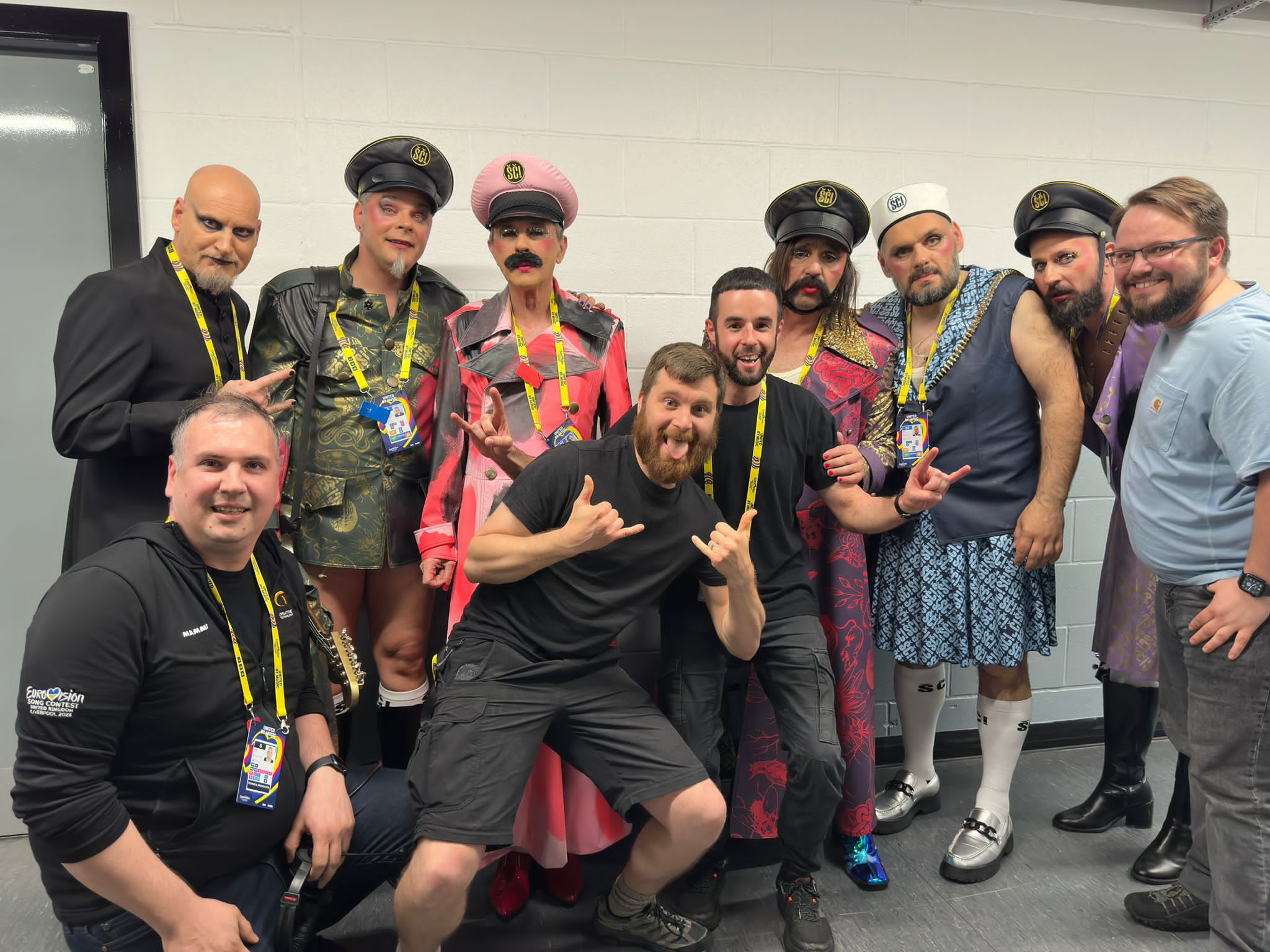
    After the show was over all of the acts were walking past our control room and everyone was cheering them on. Alum, one of the team from CT was a fellow Croatian of the band Let 3 and he fagged them down in the corridor and got a picture with them.

    Overall the event was really well put together and such a wealth of talent working on a show together, it was one of those gigs that you kept bumping into people that you’ve not seen in a long time. This post could be much longer going into the technical intricacies for the show, how the whole team where referencing CuePilot for the programming of the show which is a fantastic system, to how we were picking up the automation and recording it into d3 so we had the ability to program offline with the correct screen moves. Its been nice to write this but have left out a lot, if theres anything yous like to know about the screens side please drop me an email.
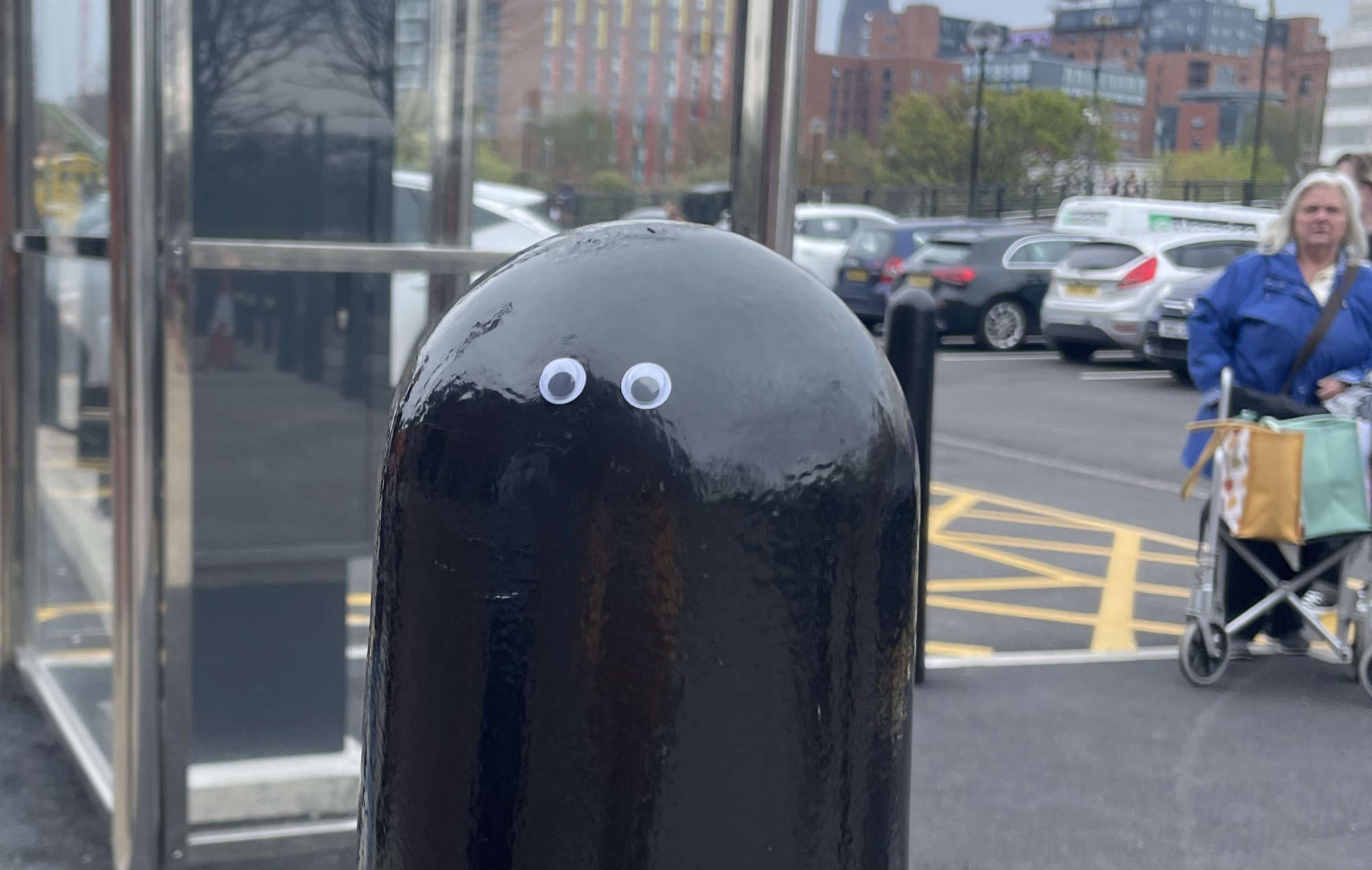
    Of course not forgetting the whole gig was peppered with googly eyes being stuck all over the venue and Liverpool.

    No comments on The Eurovision Post